Payer Policy Monitoring with AI for Proactive Billing Compliance
AI-powered monitoring catches payer policy changes in real time before claims get denied.

Denial rates in medical billing have climbed from 10.2% to 11.8% in recent years and are closing in on 12%, and that climb has almost nothing to do with billing staff getting sloppier. It has to do with payer requirements changing faster than any manual review process can track. Payers now run their own AI to review and deny claims in milliseconds, while most practices still find out about a policy change the same way they did a decade ago: a claim comes back denied, someone digs into why, and only then does the workflow get fixed. That lag is the gap this piece is about, the gap AI-powered policy monitoring is built to close.
Experian Health's 2025 State of Claims report found that 41% of providers now say more than one in ten of their claims get denied, up from 30% just three years earlier. That's an acceleration, not a slow drift, and it's still happening.
The mechanism behind it is almost mundane in its unfairness. Payers control when and how they publish policy updates, and providers have no standing notification system that tells them, in real time, that a documentation requirement changed or a prior authorization rule got added to a specific procedure code. Medical necessity criteria get quietly tightened. Code sets shift under practices' feet: ICD-10-CM updates continue to add, delete, and revise codes each October cycle, while the 2026 CPT update overhauled interventional radiology and vascular lower extremity revascularization codes. Medicare Advantage plans layer on documentation thresholds that traditional Medicare never required, and the No Surprises Act adds its own out-of-network billing rules on top. Practices tracking all of this by hand are, structurally, always finding out on the day the denial lands rather than the day the rule actually changed.
What payer-side AI has changed about how quickly and systematically denials are issued
According to the AMA's 2025 survey, 61% of physicians said payer-side AI is systematically driving denial rates upward. That's a majority naming a specific cause, not a vague sense that things have gotten harder.
Some AI-powered payer review systems reportedly deny claims at 16 times the rate human reviewers do. The threshold those systems run on is calibrated to statistical correlation, a different standard than a human reviewer's clinical judgment, and it catches deviations fast: a payer's AI cross-references documentation against code-specific requirements in milliseconds, and a missing depth measurement on a wound care note, an unsupported modifier, or a mismatched diagnosis code each trigger an automatic denial, often with no first-pass consideration of appeal.
Some payer AI systems illustrate both sides of the same coin: the same infrastructure that accelerates approvals accelerates denials just as fast, and one documented case involved more than 300,000 claims allegedly denied in under two months, a volume that outpaces how quickly the pattern even shows up in provider-side reporting.
The legal system is starting to notice. A federal class action, Estate of Gene B. Lokken et al. v. UnitedHealth Group, Inc., alleges an AI model with a 90% error rate was used to deny Medicare Advantage claims, and portions of that case were allowed to proceed in February 2025. That doesn't mean algorithmic denial is constrained yet. It means it's under scrutiny, which is a different thing entirely.
There's a compounding effect that makes this worse over time. A single modifier error, left uncorrected, can establish a denial pattern that a payer's AI flags for future scrutiny on that same code or provider. One missed policy update doesn't just cost one claim, it degrades performance on every claim submitted after it, until someone catches the pattern and fixes the root cause. Net revenue leakage grew 25% year-over-year, with U.S. hospitals losing $48.4 billion to final claim denials and uncollected patient balances in 2025, and that number is the direct consequence of automated enforcement running up against manual detection.
Why the financial damage lands hardest on independent and small practices
Denials aren't free to fix, even when they're overturned. HFMA's 2025 cost analysis puts the cost of reworking a single denied claim between $25 and $181, depending on complexity, and that's labor spent before a single dollar of the original claim comes back in.
Run the math on a mid-sized practice submitting 300 claims a month at a 12% denial rate: that's roughly 36 denied claims every month, and rework cost on that volume becomes a line item on the P&L every single cycle, not once a year. Per HFMA, up to 65% of denied claims never get reworked at all, and not because the denials were valid. Practices run out of staff capacity to fight them, so the revenue just gets written off.
Underpayment runs quietly alongside denials, too: between 1.8% and 3.4% of paid claims come in reimbursed below the contracted rate. A practice billing $4 million a year could be collecting as little as 85% of what its contracts actually promise, which is over $100,000 disappearing without a single claim getting denied. Add every leak point together and, per 2026 revenue cycle audit data from Medical Billers and Coders, multi-specialty groups routinely lose between $150,000 and $400,000 a year. Across the industry, healthcare organizations lose 4% to 5% of total revenue to preventable billing failures. For a large health system, that's a rounding error absorbed into overhead. For an independent practice, that percentage is the difference between staying open and not, and pretending otherwise is the mistake most practices make when they read these numbers as background noise instead of a warning.
Small practices don't have a dedicated person whose whole job is watching payer policy. The person tracking updates is usually the same person handling eligibility checks, payment posting, and patient billing calls, all at once. When that person leaves, the institutional knowledge of how a specific payer behaves, which reviewers push back on which codes, which documentation gets flagged, leaves with them. Every staff turnover resets the practice's payer memory to zero.
What AI-powered policy monitoring actually does, step by step
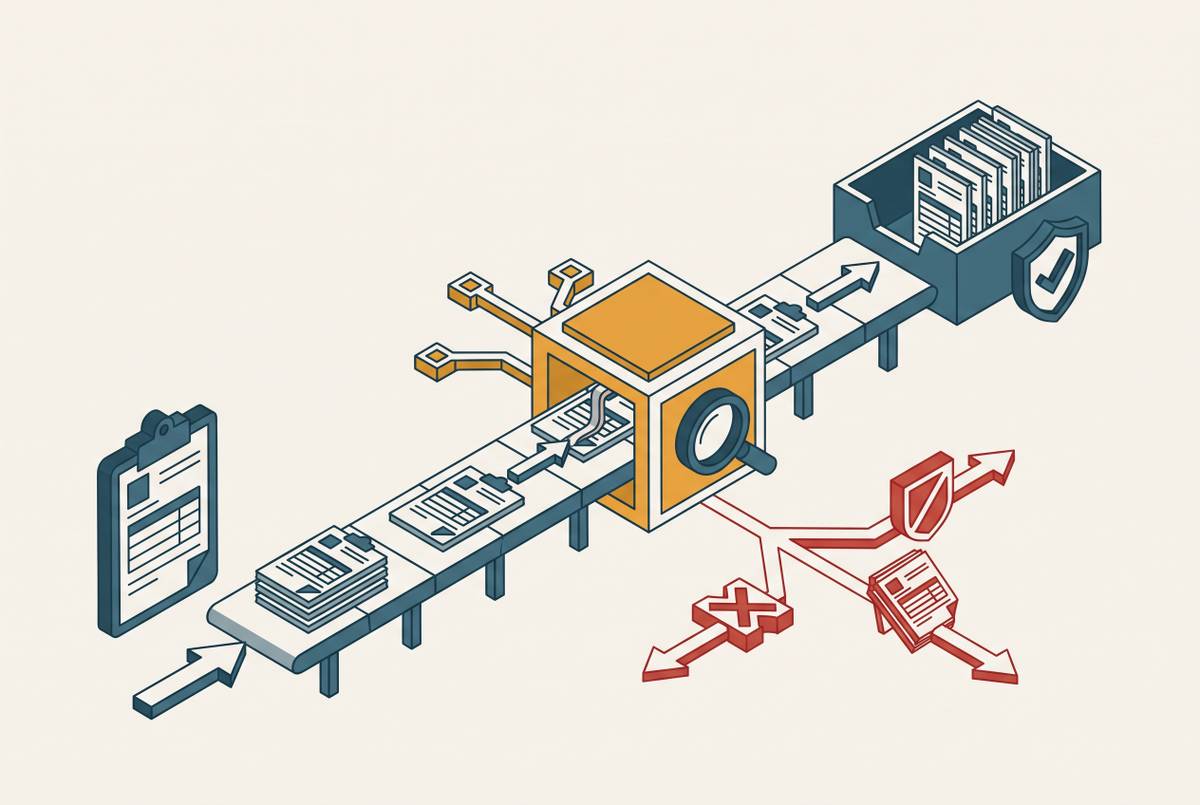
Genuine policy monitoring tools scan payer portals, LCD and NCD updates, Medicare Advantage plan policy documents, and commercial payer bulletins continuously, filtered down to the specific procedure and payer mix a given practice actually bills. This is a curated feed focused specifically on healthcare policy. It's narrowed to what's relevant to that practice's claims, and that narrowing is the whole point.
Traditional claim scrubbers run fixed if-then logic: they'll catch a missing zip code, but they'll miss a subtle shift in how a specific payer is trending on documentation for a given code, because nobody wrote a rule for it yet. AI systems trained on historical denial data can flag a claim that matches a pattern associated with denials at a specific payer, even before any hard rule exists to catch it formally. That's the distinction that actually matters, not the marketing language wrapped around it.
That pattern recognition feeds pre-submission risk scoring: each claim gets scored for denial likelihood before it ever leaves the building, and high-risk claims get routed to a human for review instead of going out and coming back. Real-time eligibility and authorization verification gets tied to the current state of payer policy, so the system checks not just whether a patient has coverage, but whether that payer's policy, as of today, requires prior authorization for that code on that date of service. A static check misses that entirely, because the requirement can change on a Tuesday and the check was written the previous spring.
Generative AI is also starting to do the reading nobody has time for. Per Medical Economics reporting from April 2026, generative tools are being used to interpret dense payer policy documents, summarize evolving medical necessity criteria, and surface the relevant guidance right where a biller is making a decision, instead of requiring someone to read a 40-page policy update cover to cover. Root-cause analysis on denials works the same way: distinguishing a denial caused by a documentation gap from one caused by a changed coverage criterion, because the fix for each is completely different, and treating one like the other wastes rework effort that's already scarce. All of this needs to show up inside the tools billing staff already use. A separate portal with a separate login just becomes one more thing nobody checks.
Where in the billing workflow AI monitoring creates the most measurable impact
Eligibility verification is the highest-leverage point to catch problems, because it sits upstream of everything else. Experian Health's 2025 data identifies intake errors, wrong policy numbers, outdated insurance cards, eligibility that never got rechecked, as a significant driver of denials. AI-assisted real-time eligibility verification catches these at the source, before a claim is even built, and this is where a practice should put its first dollar, not its tenth.
Practices that put AI-supported eligibility verification in place have reported denial rate cuts of up to 42%, according to Experian Health case data. That's the clearest return in this entire category, and it comes from fixing the earliest point in the workflow rather than the latest one.
Prior authorization status tracking matters just as much once it's built into the claim level, not handled as a side process. Without it, claims move to submission before anyone catches an authorization gap. CMS's FHIR-based prior authorization API mandate, with full compliance required primarily by January 1, 2027, will eventually build a machine-readable authorization data layer across payers. That's still ahead of most practices, not behind them, so workflow integration has to happen now rather than waiting on payers to finish their API builds.
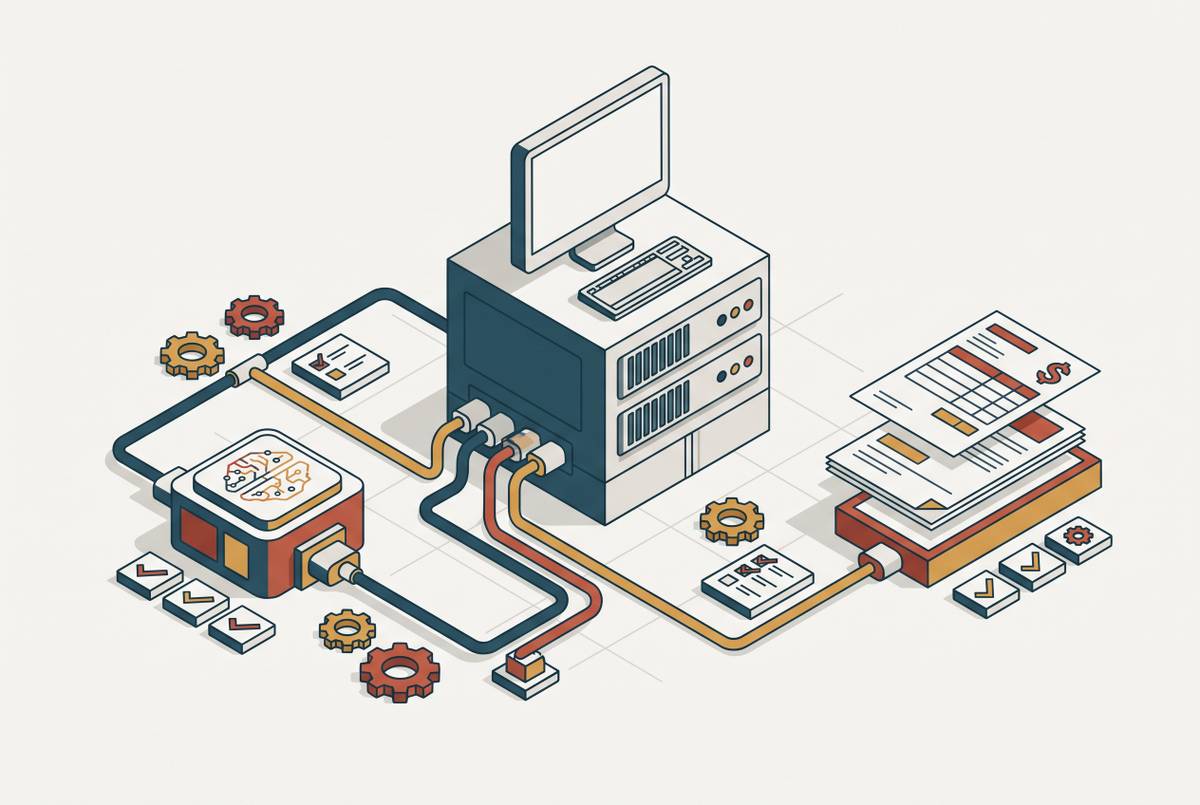
Claim scrubbing only works if it's scrubbing against the payer's current policy, not the policy as it stood when the scrubber's rule set was last updated by hand. That gap is exactly where a payer that quietly tightens a documentation requirement mid-year catches a practice off guard. Payment posting benefits too: AI-assisted remittance matching can flag underpayments against the contracted rate as remittances come in, rather than surfacing them, if at all, during a month-end reconciliation after the appeal window has already narrowed. Denial management runs on the same logic, scoring each denial by recovery probability and routing it to an appeal, a corrected claim, or a payer dispute the moment it lands, instead of sitting in a batch queue.
None of this replaces judgment where judgment is actually required. Complex medical necessity disputes and incomplete documentation generated at the point of care still need a human who understands the clinical picture. AI's value here is narrower and more mechanical: clearing out the compliance failures and pattern-based denials so the humans on staff spend their time on the disputes that actually need a clinician's read.
The regulatory environment reshaping what payer policy monitoring must cover in 2026 and 2027
CMS's Interoperability and Prior Authorization Final Rule, CMS-0057-F, requires impacted payers to stand up four FHIR APIs covering Patient Access, Provider Access, Payer-to-Payer data exchange, and Prior Authorization. Full compliance dates land primarily on January 1, 2027, which means the electronic data infrastructure behind prior authorization is coming, but for most payers it isn't live yet.
The same rule sets decision timelines: expedited prior authorization decisions within 72 hours, standard decisions within seven calendar days. Practices need to track which payers have actually implemented these timelines and which are still running on the slower cycles they used before the rule took effect. Starting March 31, 2026, payers also have to publicly report their prior authorization metrics annually, which hands practices a new data source for watching payer behavior at scale, assuming someone on staff knows to go look at it.
A separate proposed rule, CMS-0062-P, covers prescription drugs specifically. It proposes three NCPDP standards, SCRIPT, Formulary and Benefit, and Real-Time Prescription Benefit, beginning October 1, 2027, to enable electronic prior authorization for drugs. Practices billing for drug-intensive services need to track that timeline on its own, separate from the general CMS interoperability rule.
HHS has also proposed adopting HL7 FHIR standards for prior authorization transactions under HIPAA Administrative Simplification, which would apply to every covered entity that exchanges prior authorization requests and decisions electronically. Once finalized, that reshapes the technical requirements for compliant submission across the board.
States are moving on their own timeline too, and faster than the federal rules in some cases. During the 2025 legislative session, four states passed laws prohibiting payers from using AI alone to deny medical necessity or prior authorization determinations. Maryland's HB 820 specifically requires AI utilization review tools to factor in medical history, individual circumstances, and clinical information, and it opens those tools to state audit. California's SB 1120, effective January 1, 2025, goes further: medical necessity determinations, including any denial, delay, or modification of care, may only be made by a licensed physician or a licensed health care professional competent to evaluate the specific clinical issue involved. That creates a real floor on automated denial authority in California, one that practices there should factor into how they expect appeals to play out.
None of this counts as optional detail. A practice's monitoring function has to track regulatory shifts to payer behavior with the same attention it gives the payer policy changes themselves, because the two move together now.
How the voluntary prior authorization reform pledges affect what practices should actually expect from major payers
In June 2025, roughly 60 major health insurers, including UnitedHealthcare, Aetna, Cigna, Humana, Elevance Health, and the Blue Cross Blue Shield Association plans, pledged to streamline prior authorization. The specifics vary payer to payer, and treating this as one uniform announcement misses what actually changed where.
UnitedHealthcare dropped prior authorization requirements for 231 procedures in December 2025, covering nuclear medicine studies, certain obstetrical ultrasounds, and echocardiogram procedures. It also announced it will eliminate most medical prior authorizations for 1,500 rural hospitals and their associated rural practitioners, with accelerated payments cutting the payment cycle from fewer than 30 days down to fewer than 15 on average under its Rural Payment Acceleration program, set for Fall 2026. Cigna eliminated prior authorization for more than 1,100 services since 2020, including 96 codes removed in May 2025, and added real-time status tools alongside expanded patient support teams. Executives at both Cigna and UnitedHealthcare say they expect prior authorization volume to drop more than 70% by the end of 2026. Aetna has standardized 88% of its prior authorization volume. Humana eliminated roughly a third of its outpatient prior authorizations, including colonoscopies, transthoracic echocardiograms, and select CT and other advanced imaging scans, and committed to deciding at least 95% of complete electronic requests within one business day.
Industry-wide, a BCBSA and AHIP survey found an 11% reduction in prior authorizations across medical services generally, and more than 15% within Medicare Advantage specifically. Those numbers are real, and they still don't tell practices what to expect on the ground.
Only 16% of physicians working with UnitedHealthcare, and 16% working with Cigna, report that these changes have actually reduced the number of prior authorizations they personally complete. Trust the aggregate figures for what payers reported to their own surveys, and distrust them as a forecast for what any individual practice will feel this year, because that's exactly where the pledges have failed to translate so far.
KFF's 2025 data adds a layer worth sitting with. Insurers denied between 12% and 18% of standard prior authorization requests across market segments, and on appeal, 67% of Medicare Advantage denials, 47% of Medicaid managed care denials, and 43% of ACA marketplace denials got overturned. A large share of denials, in other words, were never valid to begin with, but only the practices that actually filed the appeal got that money back. Meanwhile, commercial plan denials rose 1.5% and Medicare Advantage denials spiked 4.8% between 2023 and 2024, the exact same window these reform pledges were being announced. A practice that stops monitoring because a payer made a public pledge is exposed the moment that same payer makes an undisclosed change somewhere else in its policy, and the data says that's exactly what's still happening.
What distinguishes genuine AI policy monitoring from rule-based automation relabeled as AI
Rule-based scrubbing runs fixed if-then logic that someone updates by hand. It'll catch a missing zip code every time. It won't catch that a payer quietly tightened a documentation requirement on a specific CPT code last week, because nobody has written that rule yet, and by the time someone does, the denials have already gone out. Most of what gets sold as "AI-powered" in this space is exactly this, a rule engine with a new label, and practices paying a premium for that label are paying for nothing they didn't already have.
Genuine AI policy monitoring learns from historical denial data at the payer level and the code level, which means it can surface a pattern before a formal rule exists to describe it. One system waits for a human to notice a trend and encode it by hand. The other is built to notice the trend on its own, in something closer to real time, which is the only pace that actually keeps up with how payers are running their side of this now.