EMR Integration Requirements for AI Medical Billing Tools
Data architecture matters more than AI features when choosing a billing tool.
Independent practices shopping for AI billing tools tend to ask the wrong question. They want to know what the software can do, when the question that actually matters is what it can see, and when it can see it. An AI medical billing tool cannot outperform the data feeding it: if the EMR connection is slow, incomplete, or badly built, every claim the AI touches inherits that flaw before the AI does anything at all. An algorithm that scores medical necessity correctly is worthless if it's reading a patient's insurance record from three days ago.
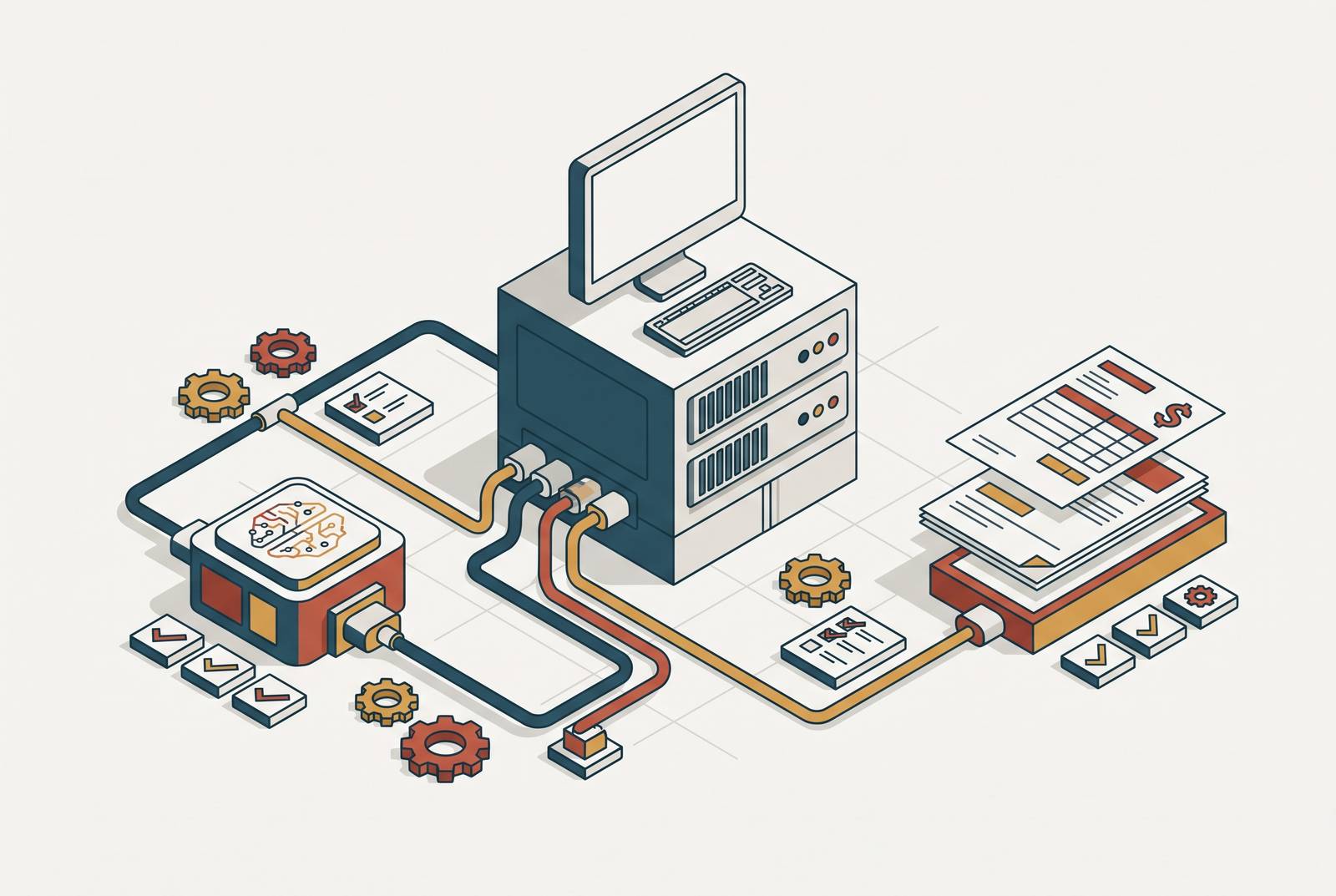
Evaluating an AI medical billing tool starts with the EMR integration architecture underneath it, not the AI features marketed on top. The four architectures to compare are HL7 interface-based integration, RESTful API integration, FHIR-based integration, and EMR-native operation; they set the ceiling on real-time data access before any billing logic runs. HL7 is batch-based and costs $50,000 to $750,000 or more to implement, making it a practical disqualifier for a small independent practice; EMR-native operation, where the EMR vendor allows it, removes the integration project entirely and gives the billing tool an unmediated view of the clinical record. From there, the next test is whether the tool can read current eligibility, live authorization status, and up-to-date payer policy at the moment a claim is formed, because any AI running on stale batch data cannot catch the errors it was built to prevent.
Which integration architecture should an independent practice build its AI billing tool shortlist around?
Four ways exist to connect a billing tool to an EMR, and the architecture sets the ceiling on real-time capability before a single line of billing logic runs. Get this wrong, and no amount of clever AI logic downstream fixes it. Skip straight to the point: HL7 interface-based integration, the oldest of the four, is the one most small practices should avoid outright, and EMR-native operation, where it's available, is the one worth building a shortlist around.
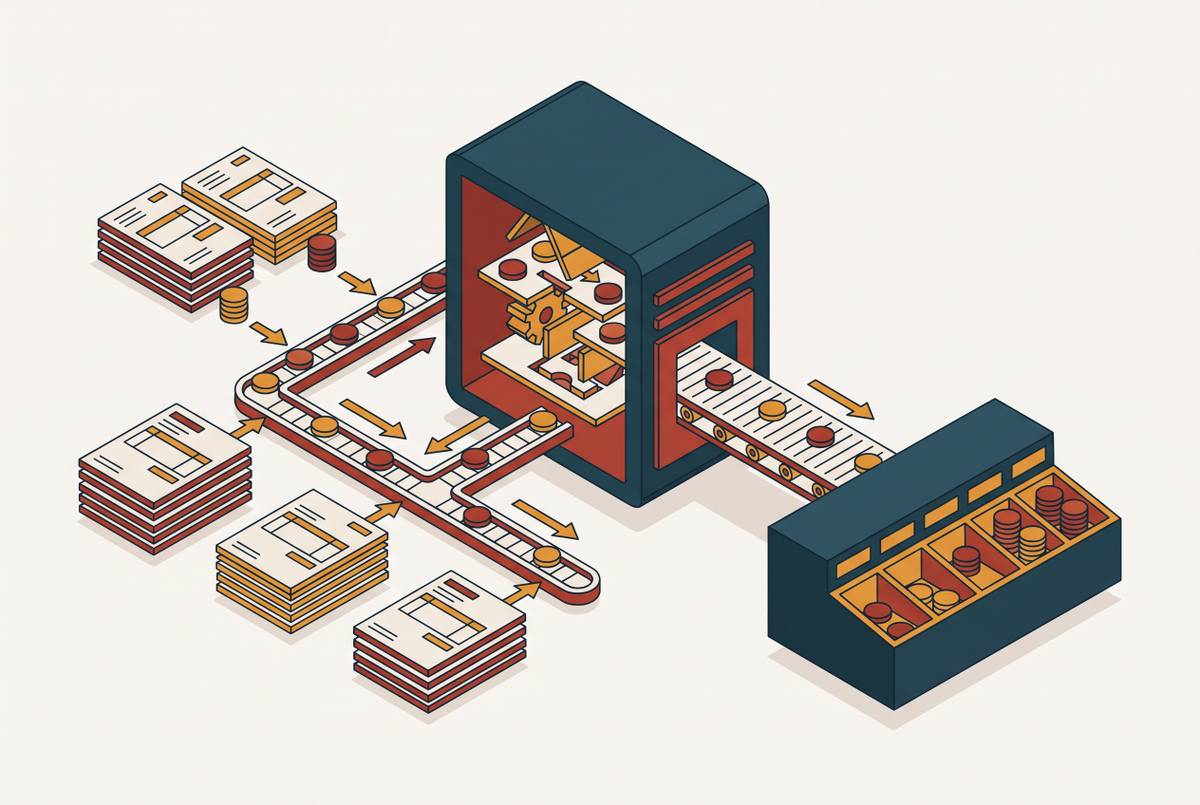
HL7 moves data in batches, not on demand. Per the ExactRx guide, implementation runs anywhere from $50,000 to $750,000 or more depending on organizational size and complexity, with deployment stretching six to twelve months and requiring developers who specialize in HL7 interfacing specifically. Because it's batch-based, eligibility checks and claim status queries reflect whatever the last sync captured, not what's true right now, a structural mismatch for AI tools built to catch problems before submission rather than after. HL7 fits large health systems with dedicated IT departments. It has no business in a five-provider practice with no in-house engineering staff.
RESTful API integration fixes the timing problem. It supports on-demand queries, so eligibility and claim status get checked in real time instead of waiting for the next batch cycle. Costs and deployment timelines run meaningfully lower, largely because API development draws on common web technologies rather than specialized healthcare interoperability skills. It still isn't free of lift: a small practice without IT staff will need outside help to build, test, and maintain the connection.
FHIR-based integration combines the clinical data structure of HL7 with the architecture of modern APIs, and it's no longer optional in the long run. CMS has mandated FHIR-based APIs for specific impacted payers under the CMS Interoperability and Prior Authorization Final Rule (CMS-0057-F), finalized in January 2024, with operational provisions taking effect January 1, 2026, and full FHIR API implementation deadlines beginning January 1, 2027. The 21st Century Cures Act already requires certified EHR systems to support FHIR-based APIs separately, so many EMRs are FHIR-ready on the clinical side even where the billing tool connecting to them isn't. Adoption timelines for practices still vary, two to six months depending on existing infrastructure, and plenty of practices run FHIR alongside older HL7 V2 systems in a hybrid state right now. The direction isn't ambiguous, though: billing tools that aren't FHIR-ready within the next twelve to twenty-four months will run into compliance friction that FHIR-ready competitors simply won't face.
EMR-native operation skips the integration question altogether, and it's the option practices underrate the most. Instead of connecting to the EMR as an external system, the billing logic runs inside the EMR itself, as a user would, with no interface build, no API layer, no middleware translating data from one format to another. That removes the handoff point where errors enter silently, because the billing tool sees the clinical record exactly as the provider left it. The catch is availability: this only works if the EMR vendor allows third-party tools to operate inside its platform, and not every vendor does. For a practice that qualifies, it's the fastest path to functional AI billing, no multi-month project attached.
Weigh any AI billing tool against these four tradeoffs directly, not against a marketing description of what the AI itself claims to do. HL7 is expensive and slow enough that it should disqualify a vendor outright for a small practice. FHIR is where the industry is heading but takes real work to get there. API integration sits in the middle on cost and speed. EMR-native, when the EMR vendor allows it, removes the project entirely.
The data the AI must read before a single claim goes out
An AI billing tool is only as sharp as the structured data available to it at the exact moment it needs it, not at the moment of the most recent sync. That distinction shows up first in demographics and insurance data: name, date of birth, member ID, group number, plan type. Any mismatch between what's in the EMR and what the payer has on file triggers an eligibility denial, and eligibility errors account for a substantial share of claim denials industry-wide. AI eligibility verification paired with predictive coverage gap detection can meaningfully cut registration-caused denials, but none of that reduction happens if the AI is reading demographics from a batch sync that ran the night before. The data has to be current, not cached.
Coverage details carry the same weight: effective dates, plan-specific benefit limits, co-pay and deductible status, coordination of benefits for patients juggling more than one plan. Eligibility issues make up a significant share of preventable denials, a category that's recoverable in theory, but only if the AI can see coverage status at the moment of the check rather than at the moment of scheduling. Tools that run eligibility verification continuously, instead of once at intake, catch plan changes and benefit-limit thresholds that a single check would miss entirely.
Authorization status is its own category, and arguably the most fragile one. Prior authorization number, authorized procedure codes, authorized units, expiration date: all of it needs to be readable by the AI before the claim is even formed. If authorization lives in a separate workflow tool that never syncs back to the EMR, the AI simply can't see it. The AMA reports physicians and their care teams complete an average of 39 prior authorization requests per physician each week, consuming at least 13 hours of staff time. AI can compress that workload substantially, but only if the integration lets it read and track authorization status in something close to real time.
Then there's the visit documentation itself: ICD-10 codes, procedure notes sufficient to establish medical necessity, provider NPI, place of service, date of service. The AI uses these fields to build and validate the claim. If the EMR record isn't finalized, or is missing a required field, the AI is stuck choosing between submitting an incomplete claim or holding it, and holding it starts the clock on timely filing deadlines. This is where EMR-native tools have a genuine structural edge: they see documentation exactly as the provider entered it, with no translation step where a field could get dropped or garbled along the way.
What real-time data flow requires and why batch processing breaks AI billing
AI billing tools are built around prevention: catch the error before the claim goes out, not after the denial comes back. That model collapses the moment the data feeding it goes stale, and batch processing guarantees it will.
Batch-based integration, the default for legacy HL7 setups, moves data on a schedule, whether that's nightly, hourly, or triggered by some other event, rather than continuously. In practice, the AI could be running its eligibility check against data that's hours old. Walk through what that actually breaks. A patient's insurance changes between the last batch sync and the visit, and the AI verifies coverage that no longer exists. An authorization comes through after the sync already ran, so the AI sees nothing and either holds the claim unnecessarily or flags it as unauthorized when it isn't. A payer changes a coverage policy overnight, and the AI keeps scrubbing today's claims against yesterday's rules. Every one of these is a denial the AI was designed to catch and couldn't, not because the logic failed, but because the pipeline delivered the wrong snapshot in time.
Real-time or near-real-time data exchange, the kind RESTful API and FHIR integrations are built to support, changes that math. It lets the AI pull current eligibility, the latest authorization record, and live payer rules before the claim leaves the building. Claim scrubbing built on complete, current data can stop somewhere between 80% and 90% of avoidable errors before submission, and that figure drops meaningfully the moment the scrubber works from a stale snapshot instead.
The right question for a practice evaluating tools isn't whether a vendor advertises real-time processing. It's whether the actual EMR connection behind that claim delivers real-time data, because a tool can market real-time capability while quietly running on a batch feed underneath it. Practices stuck on older EMRs that only support HL7 V2 batch exports have two real options: negotiate a tighter sync schedule with the vendor, or find out whether an API-based or EMR-native approach is achievable given the infrastructure already in place, before signing anything.
How payer policy changes expose integration gaps that practices did not know they had
Payers change coverage rules, prior authorization requirements, and medical necessity criteria without much warning, and practices usually find out the way everyone finds out: denials start showing up. Between 2022 and 2024, denials tied to requests for information rose by 9%, medical necessity denials rose by 5%, and requests for additional information climbed 5.4% in 2024 alone. Those categories track almost exactly with payer-side policy shifts rather than practice-side errors, which is precisely why they're so easy to miss until the volume becomes impossible to ignore.
An AI tool pulling payer policy from a static or infrequently updated database won't catch a rule change from last week. It will keep forming claims to the old specification, and the practice won't know until denials arrive in bulk. The integration needs a live mechanism for updating payer-specific logic, not one that waits for the vendor's next scheduled release. That update path might run through payer portal connectivity, clearinghouse-fed policy alerts, or human specialists monitoring payer bulletins directly. Whatever the mechanism, it has to reach the AI before the next batch of claims goes out the door. Treating payer knowledge as something installed once at implementation and left alone is exactly how a tool goes stale without anyone noticing.
The integration also needs to let a practice tell the difference between a denial spike that's payer-driven and one caused by something internal, because the fix for each looks completely different: one calls for a workflow adjustment, the other for updated policy logic feeding the AI. Many medical group leaders have reported higher denial rates year over year, and a meaningful share of that increase traces back to payer policy shifts that providers were slow to catch. Practices relying on month-end reporting to spot denial patterns are always working with information that's weeks stale, and by the time a spike surfaces in that report, the window to rework the earliest denials in the batch has already started closing.
The prior authorization data problem that integration must solve before claims are formed
Prior authorization is probably the billing workflow most damaged by disconnected systems, and the damage is structural, not incidental. Authorization requests often get managed in a separate portal or tracker that never automatically updates the EMR record the AI is reading from. When that gap exists, the AI either can't see authorization status at all or reads it as missing, and a claim that goes out without the right authorization number, or with an expired one, is a denial that didn't need to happen.
The scale here isn't small. The industry spent $1.3 billion on prior authorization administrative costs in 2023, a 30% jump over the year before, with physicians and their teams spending at least 13 hours a week on authorization management across roughly 39 requests per physician weekly. Electronic prior authorization can cut processing time by up to 90%, per an AHIP study, but that gain only shows up if the ePA system actually feeds authorization status back into the EMR or billing platform where the AI can use it. An ePA system running in isolation, disconnected from the record the AI reads, delivers none of that 90%.
What the integration has to deliver here is specific, not aspirational. The authorization number needs to be tied to the exact procedure code and date of service, readable the moment the claim is formed. The expiration date needs to be flagged before the service date, not after, so an expired authorization never makes it into a submitted claim. Documentation the payer requires as an attachment needs to live in the same workflow the AI is reading, not filed separately and attached by hand later. Pending authorizations need status tracking, so the AI can hold a claim rather than submit it prematurely and generate an automatic denial. The FHIR-based prior authorization APIs required under CMS-0057-F, operational January 1, 2026 with full API implementation beginning January 1, 2027, are built to make authorization status queryable in real time. Practices running FHIR-ready EMRs and billing tools hold a real structural advantage here, once payer-side adoption catches up to the mandate.
What denial management requires from the integration after a claim comes back
Denial management is where every earlier integration failure compounds. A claim formed on bad or missing data comes back as a denial, and if the integration can't surface that denial quickly, with enough context attached to act on, it lands in a queue most practices never clear.
A large share of denied claims are never appealed at all, arguably the most damaging number in the entire denial management picture. That figure isn't about laziness. It's the product of rework cost, filing deadlines, and simply not having enough information on hand to build a competent appeal. Rework on a single denied claim runs $25 to $118 depending on complexity, and at those numbers, whether appealing a given denial is worth the labor depends heavily on whether the AI can prioritize by recoverable value and flag exactly what documentation the appeal needs. That prioritization is itself a data problem: the AI can only rank denials and build a usable appeal if the integration hands it the original claim data, the denial reason code, and the supporting documentation together, in one place, the moment the denial arrives. Where that connection is missing, the practice is back to manual triage, exactly the bottleneck the AI was supposed to remove in the first place.