AI Versus Human Medical Billers for Small Physician Practices
Payers deny claims at scale; small practices need AI plus humans to fight back.
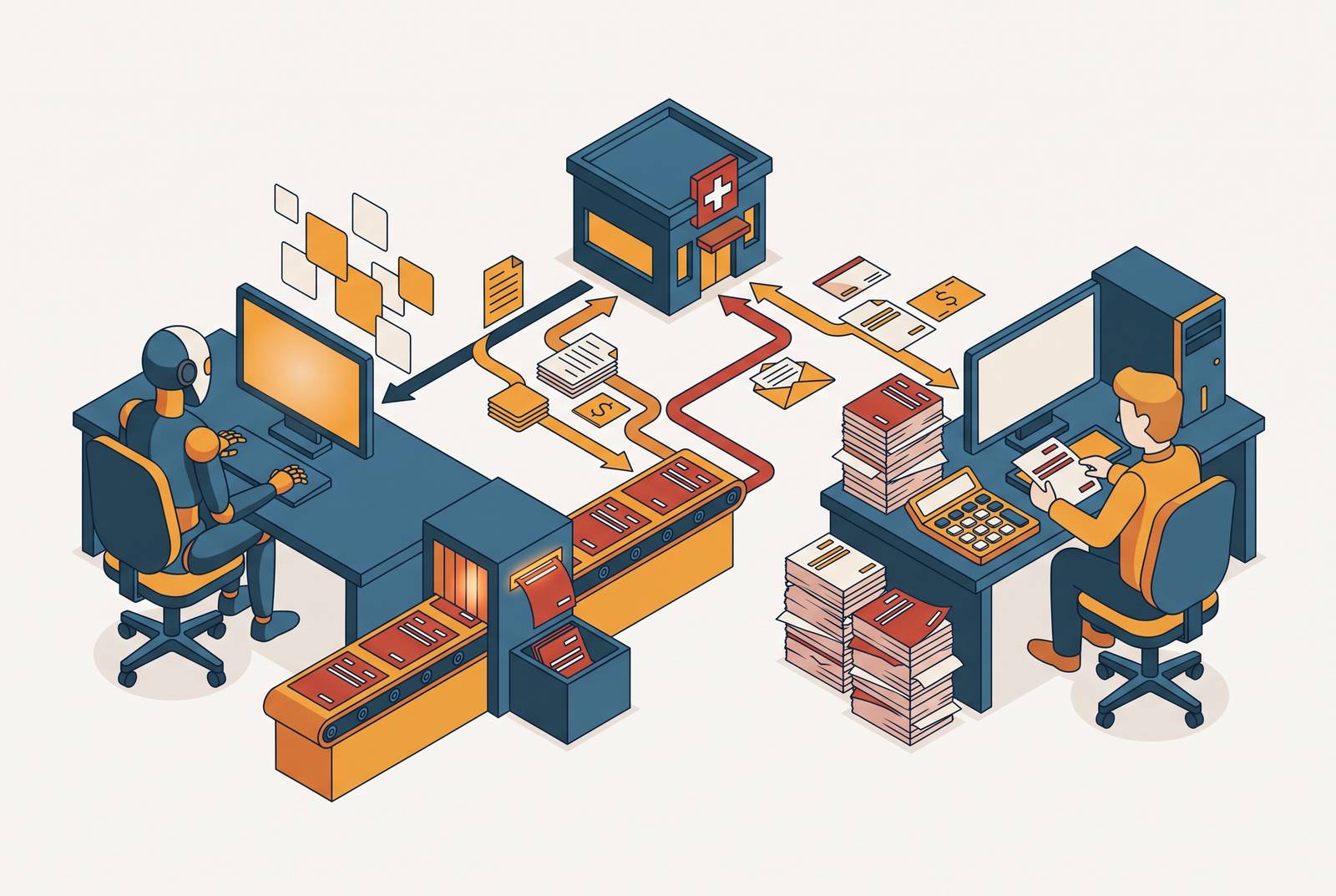
Payers run AI on their end too, and they use it to deny claims, not just process them. Requests for additional information, the kind that stall a claim before anyone has even reviewed it, rose sharply between 2022 and 2024. That timing tracks almost exactly with when payers started scaling their own denial algorithms, and that's not a coincidence worth glossing over.
For most small physician practices, the answer is neither pure AI nor a standalone human biller: it is a combined model that routes each part of the revenue cycle to whichever resource handles it better. AI holds a real advantage on volume-dependent tasks, including real-time eligibility verification, prior authorization tracking, and claim scrubbing, where practices implementing AI-assisted eligibility checks have reported denial rate reductions of 42%. Human expertise remains irreplaceable for appeals, payer-specific negotiations, and complex documentation judgment, since AI can flag a missing note but cannot write the clinical justification a reviewer needs to see. Because payers are now generating denials at industrial scale using their own algorithms, a practice running fully manual billing is the most exposed, while a practice running AI without human oversight compounds errors instead of catching them. Outsourced billing that bundles AI automation with human expertise is the option most small practices should be weighing first, not treating as a fallback.
The numbers vary by payer type, but the pattern holds everywhere. Industry surveys of hospitals, health systems, and post-acute providers have found private payers denying claims at elevated rates on first submission. Medicare Advantage, managed Medicaid, and straight Medicaid all showed higher denial rates than traditional Medicare, which came in as the lowest of the group. That gap says something uncomfortable about the incentives at play: the payers with the most to gain from denying claims deny the most claims.
Marketplace carriers show even wider spread. Using 2023 figures, the most recent available, Denial rates among Marketplace carriers vary widely, with some major insurers denying a large share of claims while others perform considerably better. Two patients with similar coverage can face wildly different odds of a clean claim, purely based on which logo sits on the insurance card, and that's the part patients never see coming.
Most of this traces back to errors nobody meant to make. Roughly half of all denials start with front-end mistakes such as wrong demographics, a lapsed eligibility check, or an authorization that never made it into the file. Prior authorization requests are frequently rejected without substantive clinical review, meaning the fight is often lost before the medical merits are ever considered. The fight is often lost before it starts, because these failures happen before a claim's medical merits are even considered.
Once a claim is denied, most practices don't fight it. Roughly 65% of denied claims never get reworked. That's not a rounding error, it's revenue the practice already earned, sitting untouched because nobody had the hours to resubmit it. Payers built systems to generate these denials at scale, and most small practices are still working the resulting pile by hand, with staff who turn over every year or two. That mismatch, industrial-scale denial generation against a cottage-industry response, is the actual market problem, and it's the reason both AI vendors and billing-service companies now exist to close the gap.
What good billing performance actually looks like, and how far most small practices are from it
There's a real scorecard for this, and small practices need to see it before they can fix anything.
An industry association set the optimal clean claim rate at over 95% in its 2024 guidance. Below 90%, staff spends real hours fixing and resubmitting claims that should have gone out clean the first time. Days in accounts receivable should sit between 35 and 40 for most practices, with MGMA's 2025 benchmarks putting high performers in that range. Once AR crosses 50 days, the odds of ever collecting that money drop fast, and past a certain point the claim is effectively dead money on the books.
Denial rate is the cleanest single indicator of trouble. Best-in-class organizations run below 3%, with anything under 5% considered strong. Plenty of practices, especially in complex specialties, run well above that without realizing it's a problem until the AR pile makes it obvious. Net collection rate matters more, because it measures what's actually collectible rather than what happened to come in the door, and below 90% usually points to denial management falling behind or charges that never got captured in the first place.
None of these benchmarks were built with a five-physician practice in mind, and that's worth sitting with. Larger multi-specialty groups staff dedicated denial teams and buy analytics platforms that flag problems before they compound. A five-physician practice gets measured against an industry average shaped by organizations with resources it will never have. The benchmark isn't a goal so much as a reminder of how wide the gap actually is, and pretending otherwise just sets a practice up to feel like it's failing at something it was never equipped to win.
Where AI billing tools genuinely outperform manual workflows
AI's real advantage is volume, and it's not subtle. A billing platform processes claim number one and claim number ten thousand the exact same way, with the exact same attention. Human staff get tired, get interrupted, and start cutting corners around 3pm on a Friday. That's not a knock on billing staff, it's just how people work, and no amount of training fixes fatigue.
Before a claim ever goes out, AI tools verify eligibility in real time, catching a lapsed policy or an unmet deductible before the appointment even happens. Prior authorization, historically a fax-and-phone-tag process that has caused documented delays in patient care, gets submitted and tracked electronically instead. Claim scrubbing catches the small stuff, a transposed digit in a date of birth, a name spelled differently than it appears on the insurance card, before the payer ever sees the claim and uses it as an excuse to deny.
Predictive denial prevention takes this further, using historical payer behavior to flag high-risk claims before submission rather than after rejection. Practices implementing AI-assisted eligibility verification have reported cutting denial rates by 42%, according to Experian Health. That's a meaningful number for a system that size, and it shows what's possible when the technology actually gets implemented instead of just purchased.
For a small practice, the staffing math matters more than the denial numbers do. AI tools can meaningfully reduce the human billing workload, which can be the difference between hiring an additional biller and not. AI absorbs annual medical coding updates the moment they publish and picks up payer rule changes automatically instead of waiting for a staffer to read a bulletin somewhere. It notices patterns across thousands of claims at once, something no single employee has time to do, and it doesn't quit or retire and walk out the door with twelve years of payer knowledge.
The vendor evidence should be read with a raised eyebrow, and it should still count for something. One case from MDeRCM, covering a five-physician internal medicine practice billing $3.2 million a year across 2025, found $487,000 recovered in previously denied or underpaid claims, days in AR cut from 52 to 19, and $218,000 saved in billing staff overhead, for a total reported impact over $705,000. It's one vendor's account of one practice, not a peer-reviewed study, and results will shift with specialty, claim volume, and how well the tool gets implemented. Still, the direction lines up with where the money is moving: the market for this category of healthcare technology has grown substantially, and most of that investment is flowing into large health systems, not independent practices. That's exactly where the adoption gap sits.
Where AI falls short, and human billing expertise is still irreplaceable
AI wins on speed and consistency for routine, well-documented claims. It loses on judgment, the kind needed for complex, high-dollar, or audit-sensitive cases where the right answer isn't a pattern match, it's a decision made by someone who understands context. This is a contest without a single winner. It's a division of labor, and any practice that treats it as winner-take-all is setting itself up to get hurt.
A federal improper payment tracking program put the FY 2025 Medicare Fee-for-Service improper payment rate at 6.55%, totaling $28.83 billion nationally. Insufficient documentation was the leading cause, and that's exactly the failure point where AI alone doesn't close the gap: a model can flag a missing note, but it can't write the clinical justification a reviewer actually needs to see.
HHS-OIG's February 2026 Medicare Advantage Industry Compliance Program Guidance flagged AI-generated EHR prompts that add risk-adjusting diagnoses as a potentially abusive practice tied to MA risk adjustment. The guidance was blunt about one thing: human review has to be substantive, not a rubber stamp, or the whole system drifts toward automation bias without anyone noticing until an audit catches it.
Appeals are where the gap shows up most clearly. Fighting a denial takes a direct conversation with a payer, knowledge of how that payer's reviewers actually behave, and a written argument built around what's worked with them before. No model pattern-matches its way into that kind of relationship. Specialty billing carries its own version of the problem: cardiology, behavioral health, and oncology all involve judgment calls that a general-purpose AI model gets wrong more often than anyone would like, and a regulatory change published last week is one a model trained on last year's data has no way of even knowing exists.
Practices that turn AI loose without oversight run into trouble fast. The tool misreads a complicated chart, misses a payer-specific carve-out, and if nobody's watching, the errors compound instead of shrinking. AAPC's 2025 data backs this up directly: practices that paired staff with AI monitoring saw denial rates fall by a mean of 18%, compared to practices running automation with nobody checking its work. That gap is the whole argument for why oversight is necessary. It's the mechanism that makes the technology safe to use at all.
Knowing which adjuster at which payer responds to which argument, which codes draw scrutiny at which carrier, is a piece of this no software update will ever capture. That knowledge lives in the heads of billers who've done this for years, and most practices throw it out the door every time one of them quits.
Should a small practice use AI billing software or stick with a human biller when payers are using AI to deny claims?
The "replace or don't replace" debate is a marketing frame, not an operational one, and practices that fall for it end up making the wrong call in both directions. Practices getting real results aren't picking a side. They're routing each claim to whichever resource handles that particular type of work better, and building a system where both are doing what they're actually good at.
AI and humans fail at different points in the cycle, which is the whole argument for combining them rather than choosing between them. AI stumbles on documentation nuance, payer-specific exceptions, and the judgment calls appeals require. Human-only billing stumbles on volume, on staying consistent claim after claim, on spotting a pattern buried across ten thousand submissions that no person has time to scan. Go all-AI and a practice inherits the first set of failures. Go all-human and it inherits the second. Neither is a safe bet on its own, and treating one as sufficient is where the real losses happen.
Experian Health's 2025 survey found that 67% of healthcare organizations believe AI can improve the claims process, yet only 14% have actually put AI tools to work. That gap doesn't mean the technology fails to deliver, it means cost and complexity are keeping practices on the sidelines. Licensing, staff training, and IT setup all carry real upfront costs, even when the long-term math clearly favors adoption. That's exactly why outsourced billing that bundles AI with human expertise has become such an attractive middle path for practices too small to build either capability from scratch.
The right question concerns how to use AI. It's which parts of the revenue cycle suit AI, which suit humans, and who's accountable the moment an exception shows up that neither the model nor the workflow anticipated. AI doesn't eliminate billing work, it shifts it: coders stop entering codes by hand and start reviewing AI suggestions instead, billers stop chasing every denial manually and start managing the exceptions the system can't resolve on its own. Headcount changes. The need for human judgment doesn't.
How a combined AI-and-human billing model functions in practice
Before the visit even happens, AI should be doing the heavy lifting. Eligibility gets verified against current coverage in real time. Prior authorizations get submitted and tracked electronically rather than through manual processes. Documentation gets checked for completeness before the claim is even built, catching gaps while there's still time to fix them instead of after the denial letter arrives.
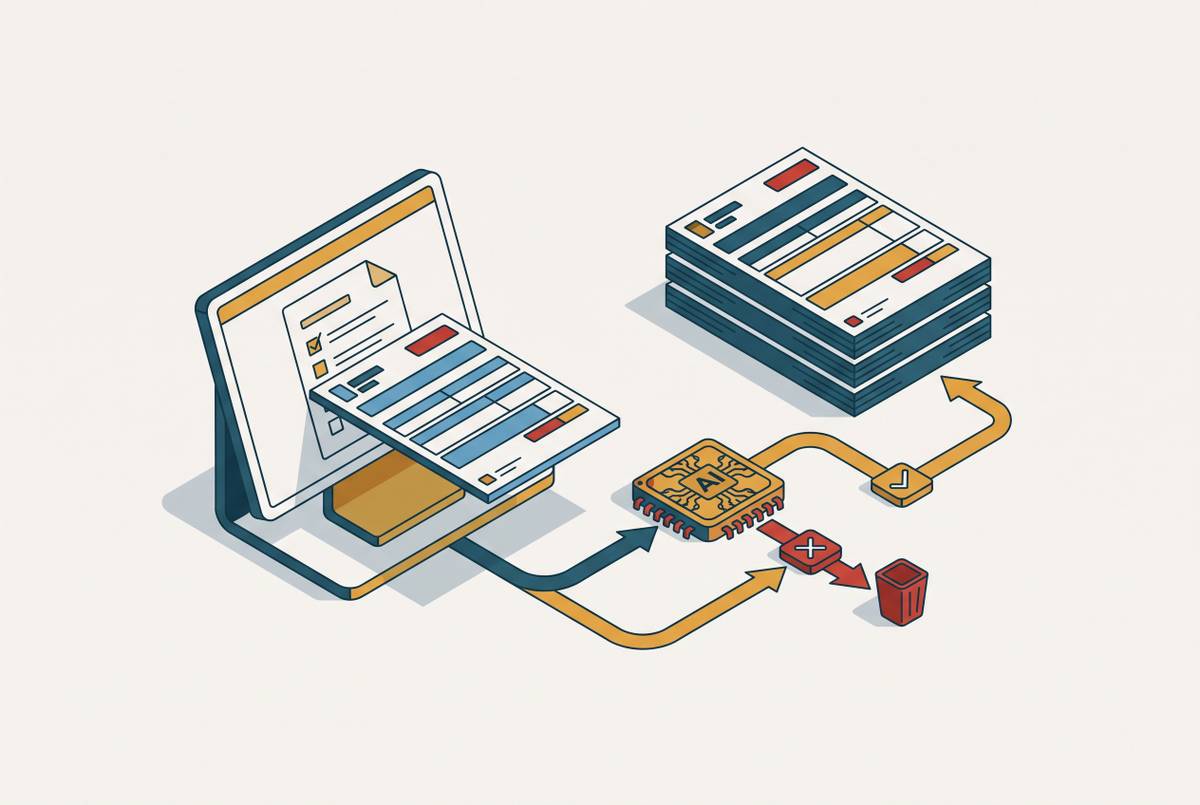
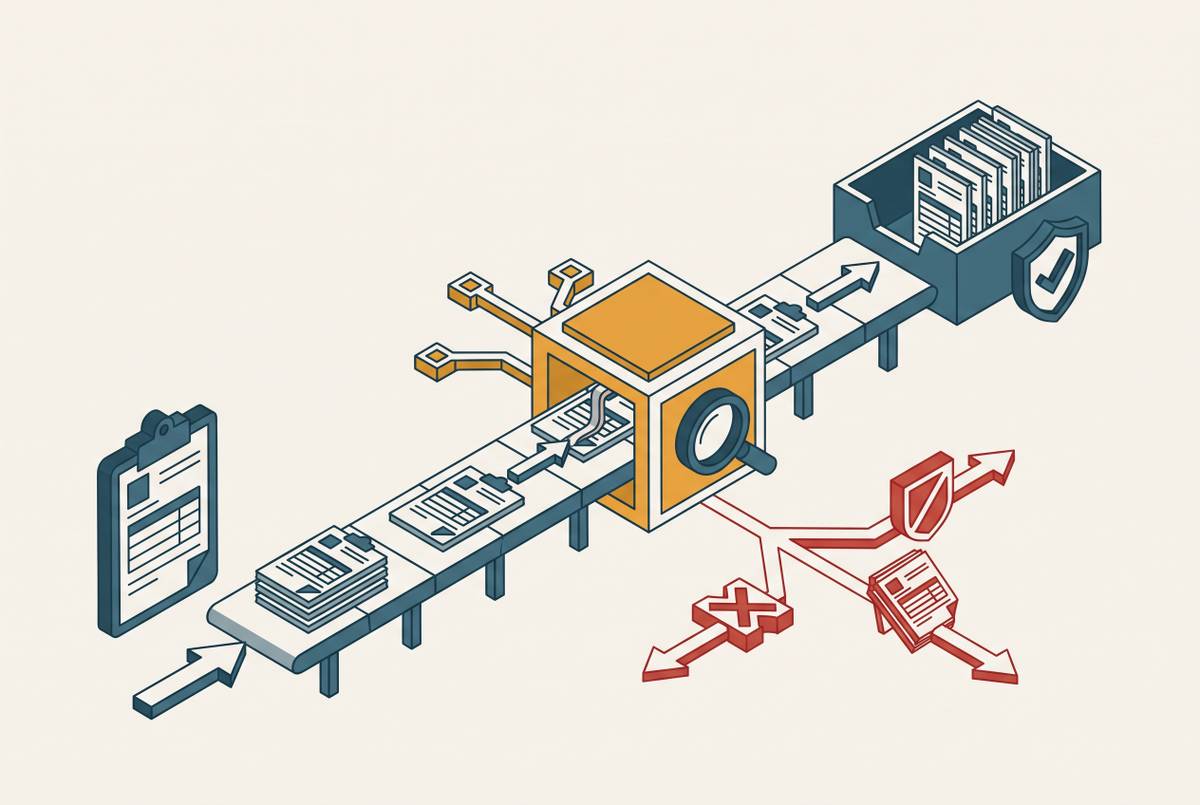
At the claim-scrubbing stage, AI flags anything that looks like a coding discrepancy or a high denial risk, and a human biller reviews only the flagged exceptions rather than every single claim that goes out the door. Not every claim needs a person's eyes on it, just the ones the system can't confidently route on its own. Clean claim rates climb because problems get caught before submission instead of after a denial letter shows up weeks later.
Denial management is where human judgment does the real work. AI surfaces a denied claim quickly and helps prioritize the queue, but a person has to actually work it right away, not queue it for next week, which is exactly where recovery rates fall apart. Appeals depend on knowing what argument moves a specific payer's reviewers, and that's institutional memory no model has.
On the AR side, AI matches payments to claims using ERAs and EOBs, flags underpayments, and keeps the ledger current without someone typing it all in by hand. Humans step in for the discrepancies AI can't classify on its own: a contractual dispute, a payer suddenly behaving differently than its historical pattern suggested it would.
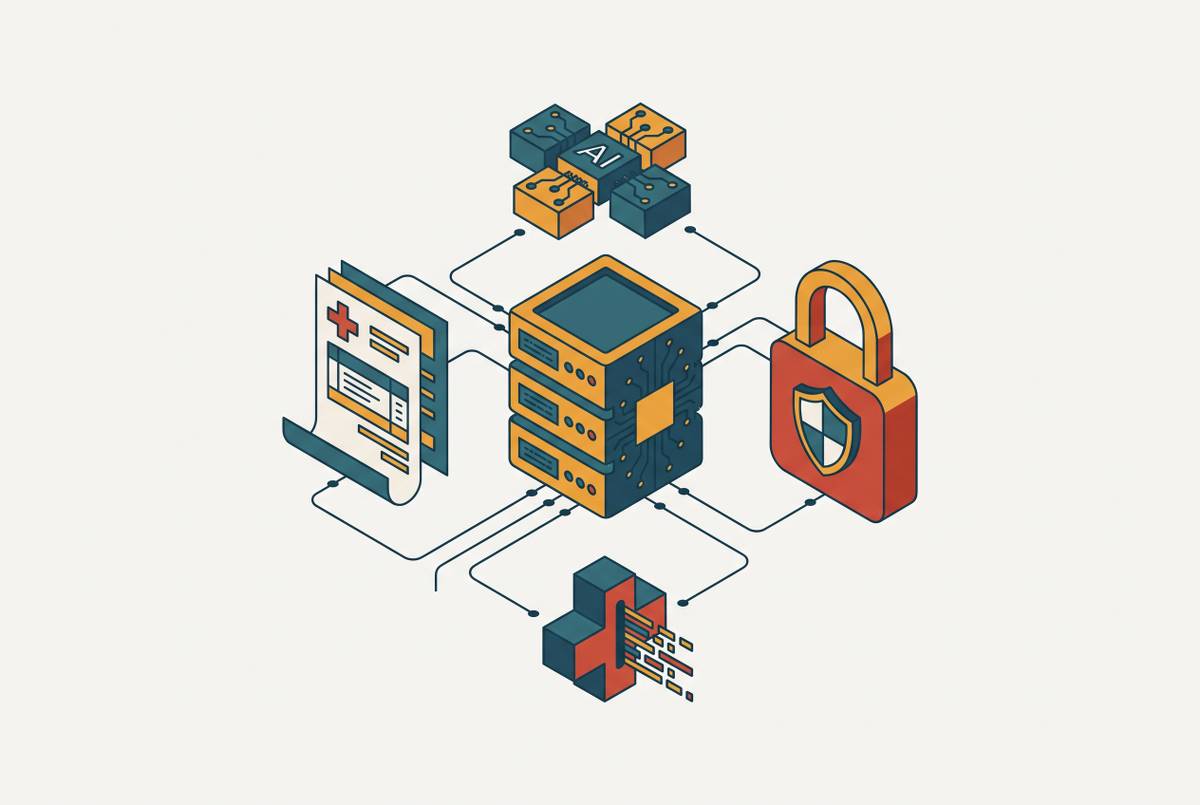
None of this works if the AI tool doesn't talk to the practice's existing EMR and clearinghouse. The billing operation should bend to fit the practice, not the other way around, and a practice shouldn't have to rebuild its entire workflow just to get better billing outcomes. Underneath every layer of this, HIPAA compliance and data security aren't add-ons to evaluate later. They're the baseline any system touching patient financial data has to meet before anything else about it matters.
What small practices should evaluate when choosing how to structure their billing operation
Three real paths exist here, and they carry very different tradeoffs, not equally good options dressed up as a menu.
In-house billing with AI layered on top keeps control inside the practice, but staff still have to learn the tool, monitor its output, and manage the IT infrastructure behind it. The upfront cost is real, and it doesn't disappear just because the long-term savings look good on paper.
Fully manual in-house billing, the traditional model, is running out of road. At current payer complexity, practices relying on it are the ones most exposed when a payer changes policy without warning and nobody catches it until the denials pile up. That model made sense a decade ago. It doesn't anymore.
Outsourced billing that combines AI automation with in-house human expertise takes on the technology cost and brings payer-specific institutional knowledge along with it, without forcing the practice to rip out its EMR or retrain the front desk. That's why it's the option most small practices should be weighing first, not last, and treating it as a fallback rather than the default is the mistake worth naming directly.
Before signing with any billing partner or vendor, a practice should get specific answers to a short set of questions. Where exactly does AI handle a claim, and where does a person take over, and is that line drawn clearly or left vague? What happens the second a claim gets denied: does someone work it immediately, or does it sit in a queue for a week? How does the partner keep payer knowledge current when a policy shifts without notice? Does the system plug into the practice's existing EMR and clearinghouse without demanding a full workflow rebuild? And what's explicitly excluded from the service, since medical coding is its own discipline, and any billing service that blurs the line between coding and billing is one worth questioning closely before anything gets signed.