AI Prior Authorization Tools in Physician Practice Billing
Doctors spend $24,500 yearly on prior authorization paperwork.
Prior authorization has become the single most disruptive administrative task in physician billing, and the numbers back that up with unusual clarity. Physicians average 43 prior authorization requests a week and spend roughly 12 hours on them, according to AMA survey data; run that pace across a year and a single physician clears something like 2,236 PA transactions annually. That volume isn't background noise. It reshapes how practices staff their front office, how they schedule patients, and where their money goes every month.
MGMA's regulatory burden survey ranked prior authorization as the top regulatory issue facing practices, ahead of everything else practices deal with. Ninety-two percent of practices told MGMA they'd had to hire extra administrative staff just to keep up with PA volume. That's not a rounding error; that's a structural cost baked into how practices operate now.
The burden isn't evenly spread, either. Specialists and behavioral health providers spend 24 to 25 minutes per phone, fax, or email authorization, compared to 14 minutes for generalists, and the specialties facing the highest PA requirement rates read like a list of the most clinically demanding fields in medicine: radiation oncology, cardiology, diagnostic radiology, neurosurgery, hematology/oncology, rheumatology. These are the practices where a denial doesn't just cost money. It delays cancer treatment, cardiac intervention, or a diagnostic scan that can't wait.
The direct cost of manual prior authorization at the practice level
The 2024 CAQH Index puts a dollar figure on the gap between manual and electronic processing: $10.97 per transaction manually, versus $5.79 fully electronic. Apply that manual rate to the AMA's volume figure and a single physician's PA processing runs close to $24,529 a year in direct administrative cost alone, before anyone accounts for the clinical fallout of a denied or delayed authorization.
Specialists stand to save an average of $8 per authorization through automation, a number that sounds modest until it's multiplied across a high-volume cardiology or oncology practice submitting hundreds of requests a month. And the CAQH figure only counts direct processing cost. It doesn't touch physician time pulled away from patients, staff burnout from re-keying the same clinical data into three different payer portals, or the revenue that quietly disappears when an authorization sits unresolved past a filing deadline.
CMS projects $15 billion in industry-wide savings over ten years from its electronic PA rule, CMS-0057-F. That's a useful macro signal for policymakers, but a practice owner doesn't operate at the industry level. The per-physician math, that roughly $24,500 annual manual-processing cost, is the number that actually lands on a P&L.
Cost, though, is only half the story. Denial rates are where administrative friction turns into real financial and clinical damage, and that's where the newly public payer data gets interesting.
What newly mandatory payer disclosure data reveals about denial rates
CMS-0057-F now requires payers to publish PA metrics annually, and 2025 was the first year that data became available at any real scale. A KFF analysis found average standard PA denial rates of 12% in Medicare Advantage, 14% in Medicaid managed care organizations, and 18% in ACA Marketplace plans, covering 25 million Medicare Advantage enrollees, 36 million Medicaid MCO enrollees, and 10.8 million ACA Marketplace enrollees.
The denial rate isn't the most damning number in that dataset. The appeal overturn rate is. Across coverage categories, a substantial share of denied claims were reversed on appeal, suggesting that many initial denials were not clinically defensible.
That gap between initial denial and appeal outcome says something plain: a meaningful share of first-round denials were never clinically defensible. They were friction, not medical judgment, and they got reversed the moment a human looked closely enough to push back.
Variation across insurers, even within the same coverage category, is extreme. Across the full CMS-0057-F dataset, denial rates vary widely across insurers. Two payers covering similar populations, similar procedures, similar clinical documentation, produce wildly different outcomes. And this data, for all its value, has real gaps: it's aggregated at the insurer level, with no service-type breakdown and no required explanation of why a given claim was denied. Those gaps are exactly why payer-specific intelligence matters more, not less, to a practice trying to plan around this.
How payers are using AI to increase denial velocity while practices absorb the fallout
The AMA has raised concerns that payer-deployed AI tools are increasing denial rates and generating batch denials at scale, with reports suggesting payer AI tools can produce denial rates substantially higher than typical human review. That's not a marginal efficiency gain for payers. That's an entirely different denial machine.
The regulatory response followed fast. Regulatory scrutiny of payer AI use has intensified, with legislative and regulatory efforts in multiple states moving to restrict insurers from relying on AI alone to make coverage determinations. Legal challenges against major insurers over denial practices have also emerged in this environment.
A number of major insurers have made public commitments to speed up prior authorization and ensure that medical necessity denials receive clinician review. Reasonable people can be skeptical of how much that pledge has actually changed on the ground. Hospital and practice groups have continued to report that time spent securing PA approval has gone up, not down. The gap between what insurers committed to and what practices are experiencing remains wide.
Here's the asymmetry that matters: payers have always had institutional memory about what gets denied, when, and under what pattern. Practices, historically, have had none of that working in their favor. Provider-side AI tools exist to close that gap, not to add automation as a novelty, but to match the speed and pattern recognition payers already deployed against them.
What AI prior authorization tools actually do in a practice billing workflow
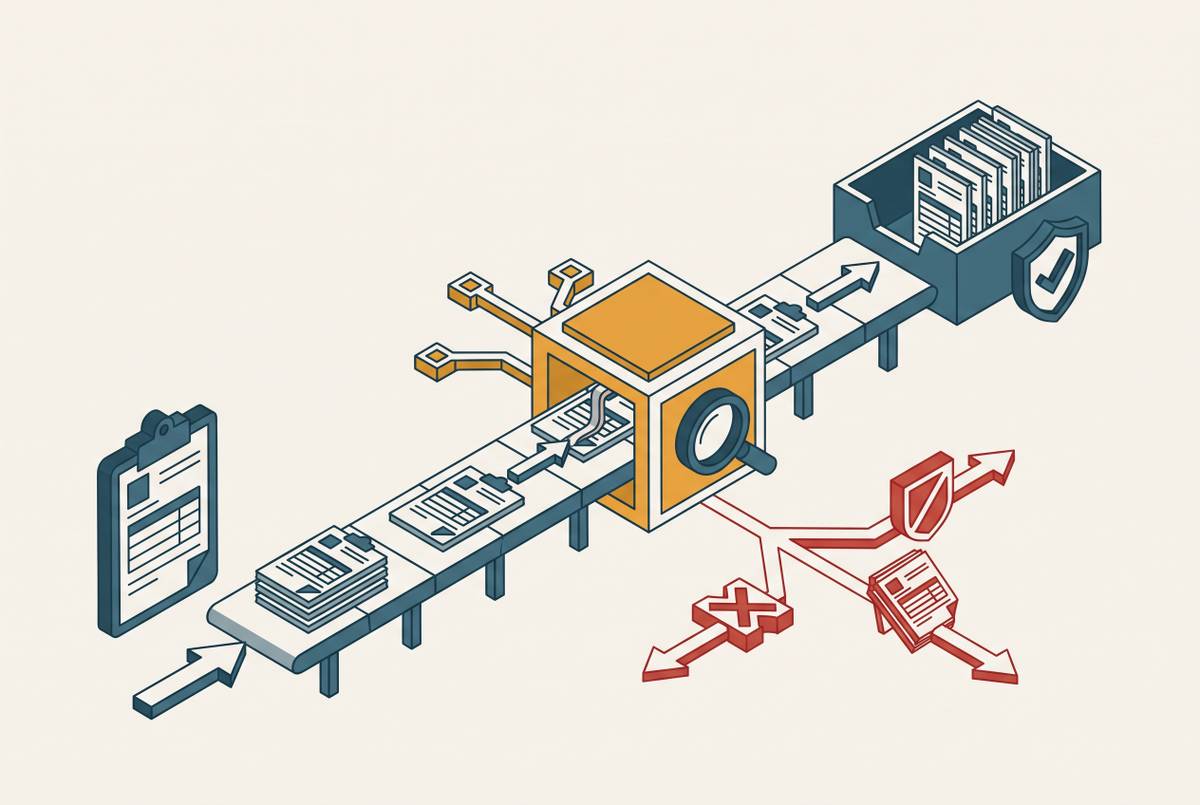
Strip away the marketing language and these tools perform a handful of concrete functions. At the front end, they verify eligibility and benefits at the point of scheduling, look up payer policy in real time, and determine automatically whether a given service needs PA for that specific payer and plan.
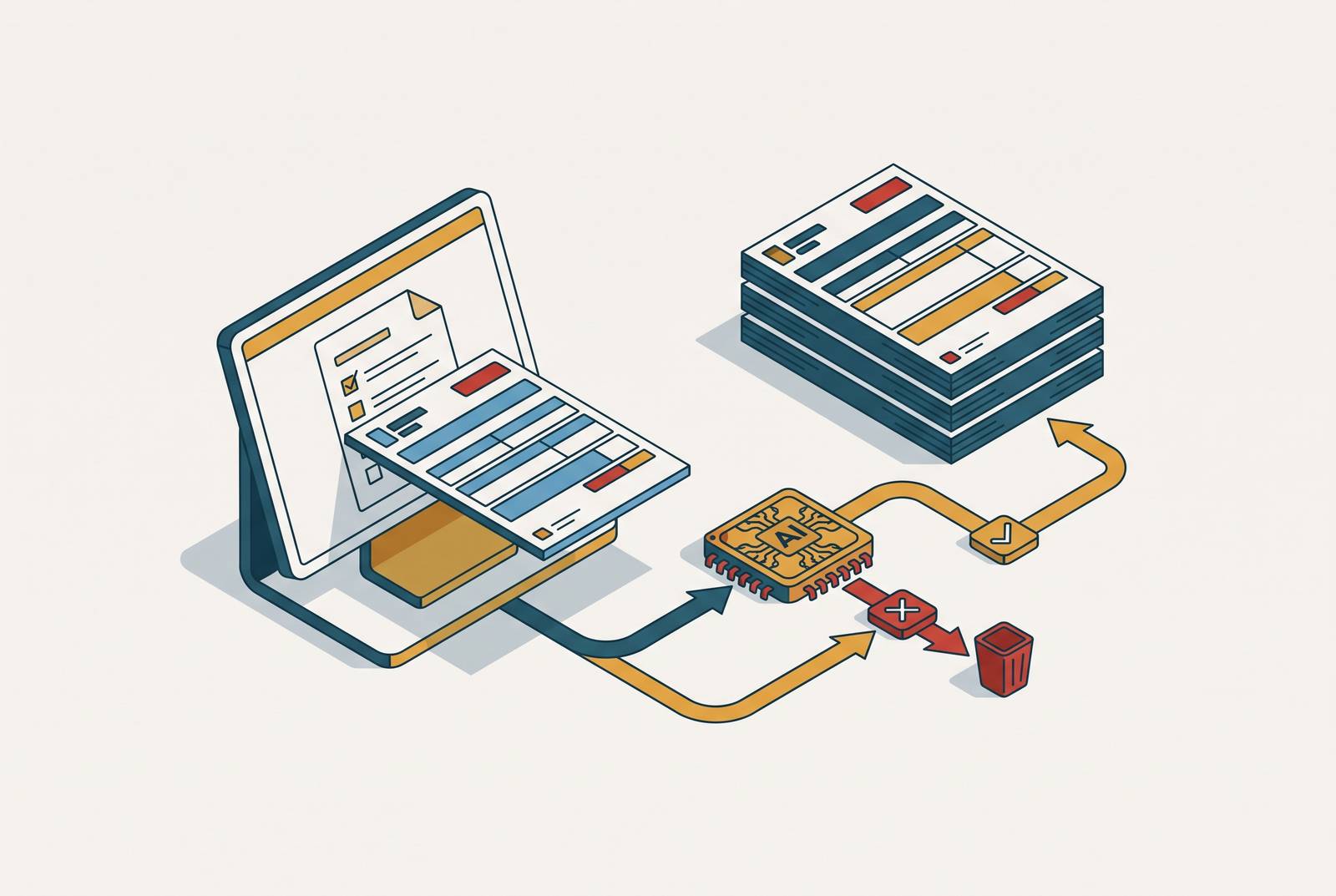
At the submission stage, they auto-populate PA request forms using structured clinical data pulled from the EMR, route the request through the correct payer channel, whether that's a portal, fax-to-digital conversion, or direct electronic submission, and track status without a staff member manually calling to check.
The more valuable layer is decision support: flagging likely denial risk before submission, based on payer-specific pattern data, so documentation can get strengthened or the authorization pathway reconsidered before a denial ever happens rather than after. Post-submission, the tool tracks status in real time, escalates pending requests automatically as deadlines approach, and routes denials straight into an appeal workflow the moment a decision lands, not queued for someone to notice during a weekly batch review.
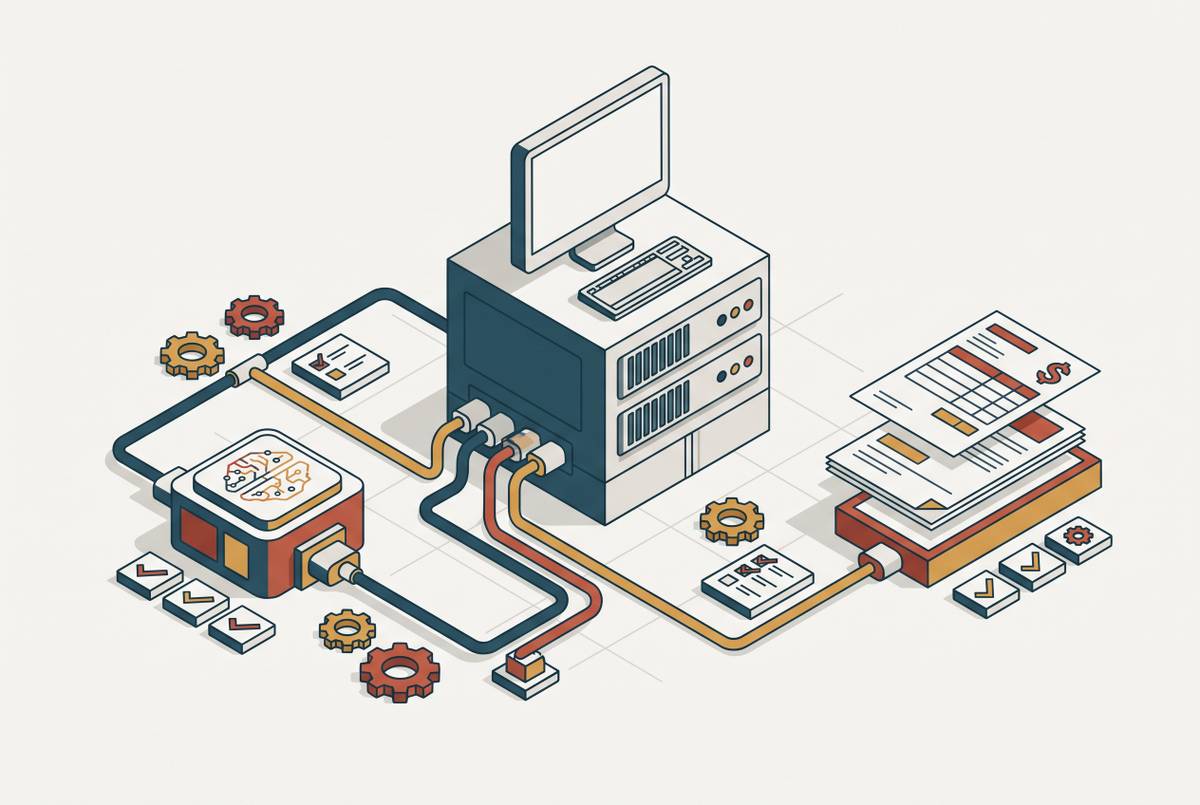
None of this typically requires ripping out an existing EMR. The tool needs read access to structured clinical data, and if it integrates at the clearinghouse or data layer, front desk workflows don't need to change at all.
There's a meaningful split in the market worth naming directly: tools that query a static payer policy database versus tools that learn payer behavior over time. The static ones are useful on day one and stale within months. The learning ones compound in value as submission history builds, which is exactly the kind of institutional memory practices have lacked. The clinical stakes here are not abstract. Ninety-three percent of physicians say PA negatively affects patient outcomes, and 82% report patients abandoning treatment altogether because of PA delays.
Where AI-assisted prior authorization produces measurable results and where it doesn't
The clearest published evidence comes from Northwell Health's radiation oncology deployment, where PA rulings were built directly into clinicians' daily workflow rather than bolted on as a separate tool. Over 6,550 radiation oncology cases were tracked, with 2,400 in the intervention group, and the results were substantial: a 65.4% average reduction in PA denials, from 7.6% down to 2.6% across all health plans, and a 33.9% drop in median authorization time.
The variation across individual payers is the part that deserves the most attention: per-payer denial reduction ranged from 45.7% to 88.6%. That spread isn't noise. It's evidence that payer-specific calibration, not the AI model in isolation, is what drove the result.
What this evidence doesn't answer yet is how these tools perform in a small independent practice without Northwell's data infrastructure, or how well the gains generalize to specialties with lower PA volume and thinner submission history to learn from. There's also an honest limitation worth stating plainly: tools trained on historical payer data go stale the moment a payer changes policy without notice, which happens constantly and rarely comes with a warning to the practices affected. That's a real problem for practices whose institutional billing memory resets every time a biller leaves.
Given that nearly one in four physicians report PA has led to a serious adverse event for a patient, the honest posture toward these tools is careful evaluation, not blind adoption as a cost-cutting measure. And the tools are weakest exactly where judgment matters most: genuinely novel clinical situations, appeals that require a narrative medical argument rather than a checkbox, and payers whose behavior is erratic rather than pattern-driven. Those cases need a human billing expert in the loop, full stop.
Why payer-specific intelligence is what separates effective tools from fast ones
Insurer behavior isn't uniform, and treating it as if it were is the single biggest mistake a practice can make when adopting one of these tools. Within Medicare Advantage alone, denial rates in the CMS-0057-F dataset vary substantially across insurers. Submit the identical request, with identical documentation, to two different payers, and the odds of approval are structurally different before a human even reviews the claim.
Payer-specific intelligence, in practical terms, means knowing which payers demand supporting documentation that never appears on the standard form, which payer portals have submission quirks that trigger a technical denial regardless of clinical merit, and which CPT and diagnosis code combinations a particular plan happens to be flagging this quarter. Static policy databases can't hold that. Payers change coverage criteria, formulary tiers, and documentation requirements on their own schedule, and they rarely tell practices directly when they do.
That knowledge, which payers behave which way, which appeal arguments have actually worked, which documentation gaps caused which denials, is a compounding asset. Most practices lose it entirely the day a skilled biller quits. Twenty-seven percent of physicians say their PA requests are often or always denied, a figure that more likely reflects submissions going out without payer-specific calibration than requests that were genuinely unapprovable to begin with.
The Northwell numbers make the case better than any argument could: a 45.7% to 88.6% spread in denial reduction across different payers, using the same underlying tool. Payer-level behavior is the variable that actually matters. A tool that treats every payer the same will underperform against one built to notice the difference.
The role human oversight plays in an AI prior authorization workflow
AI earns its keep on the pattern-recognizable majority: standard submissions, routine eligibility checks, known documentation requirements for common procedures. That's where the speed and scale gains actually show up, and it's a real gain, not a marginal one.
Humans earn their keep everywhere else. Complex multi-payer cases, appeals that need a clinical narrative rather than a form field, novel procedures with no authorization history to draw on, situations where a payer's written criteria and its actual approval behavior quietly diverge. In the MGMA survey, 97% of physicians report that medically necessary care gets delayed or denied at some point, and in a large share of those cases, a skilled human appeal is the only route back to approval.
Regulation is starting to encode this division of labor rather than leave it to vendor discretion. Emerging state-level restrictions on AI-only coverage decisions and insurer commitments to clinician review of medical necessity denials both draw a floor that a fully automated tool simply cannot meet. The workable model, then, is AI handling flagging, routing, submission, and tracking, with human billers stepping in at the decision points that actually require judgment. Neither half does the whole job alone.
Staff turnover is the quiet risk underneath all of this. A practice that keeps its PA judgment entirely in the heads of trained staff loses that judgment the day those people leave. A system that encodes payer-specific patterns in software keeps it. When evaluating a vendor's human layer, the questions worth asking are concrete: are the billing specialists in-house rather than an offshore scripted queue, do they have specialty-specific experience in, say, oncology or cardiology, and is there an actual defined escalation path, not a chatbot with an "escalate" button bolted on.
How to evaluate whether an AI prior authorization tool will actually perform for your practice
Start with payer mix, not feature lists. Which payers make up the bulk of a given practice's PA volume and denials? A tool with no behavioral data on a practice's top three payers isn't going to move that practice's denial rate, no matter how polished the interface looks in a sales demo.
Ask about integration next. Does the tool connect into the existing EMR and clearinghouse, or does adopting it mean a platform migration? The answer needs to be the former. Anything requiring a system switch adds implementation risk that eats into whatever efficiency the tool promises to deliver.
Separate real-time tools from batch-reporting ones. A tool that flags denial risk before a claim goes out is structurally different from one that reports on last month's denials after the fact. The first one recovers revenue that would otherwise be lost for good. The second one just describes the loss after it's already happened.
Push on the update cycle specifically. How fast does the tool reflect a payer's policy change? A useful, concrete question for any vendor: how did the system handle a recent major payer policy update, and how long before it showed up in the tool's behavior? That answer tells a practice whether the intelligence layer is actually live or quietly lagging behind.
Assess the human component the same way. Who handles appeals and edge cases, and do they have specialty-specific experience, particularly for oncology, cardiology, or behavioral health, where the clinical stakes run higher? After implementation, track clean claim rate on first-pass PA submissions, denial rate broken out by payer, median authorization turnaround time, and appeal overturn rate; these metrics should be reviewed regularly to assess whether the tool is delivering results if the tool is genuinely calibrated to a practice's actual payer mix. And treat certain answers as disqualifying red flags: a vendor who can't produce payer-specific performance data, a tool that requires retraining the entire front desk, or a system with no defined path for escalating a complex denial to a human being who can actually argue it.