Underpayment Detection and Recovery in Physician Practice Billing
Physician practices lose millions to silent underpayments their billing systems never detect.
A physician bills a 99215 for a complex office visit. The payer's contract calls for a specific reimbursement rate. The remittance comes back lower, no explanation attached, and the practice management system posts the payment, books the shortfall as a contractual adjustment, and closes the claim at zero balance. Nothing in that sequence looks broken. That is precisely the problem.
A denial announces itself. It carries a code, drops into a worklist, and someone on staff is assigned to work it before it ages further. An underpayment does the opposite: the payer remits a short payment, the system posts it, files the gap under a contractual adjustment, and moves on as though the account were settled correctly. Ned Lutz, founder of CoverageUnlocked, said: "Downcoding is silent. The remit just comes back a little light. No denial document hits your queue. You can't appeal a haircut you never flagged, and most billing workflows have no trigger for 'paid, but paid wrong.'"
Every submitted claim resolves one of three ways: it gets denied, it gets written off, or it gets underpaid. Practices have built entire departments and dashboards around the first category and reasonably good habits around the second. The third one hides inside the write-off bucket, indistinguishable on paper from a write-off the practice actually expected and agreed to. That combination is the trap. The system doesn't fail loudly. It just quietly agrees with the payer's math, right or wrong.
The consequence runs through the entire revenue cycle stack. The denial dashboard won't show it, because there's no denial. The clearinghouse won't show it, because the claim processed cleanly. The AR aging report won't show it, because the account isn't aging, it's closed. Three separate tools, three separate teams checking them, and none of them built to ask the one question that matters here: did the payer actually pay what the contract says they owe?
Some billing teams will point to their variance report as the safety net. It isn't the safety net billing teams take it for. A variance report only flags payments that deviate from a stored expected rate. It's only as good as the rate sitting in that field. It misses underpayments that come from misapplied edits, rate tables that were never loaded correctly in the first place, or alternate adjudication logic the system was never told to expect. Ensemble Health Partners' own recovery data, cited in industry reporting, found that most of the underpayment dollars its clients recovered in 2022 were found outside the variance report entirely. If the tool practices already trust is missing most of the leak, the leak is a structural blind spot. It's a structural blind spot.
The scale of the underpayment problem for small-to-midsize physician groups
Scale matters here: the numbers split sharply by size of organization. Physician groups lose to underpayments at roughly twice the rate large health systems do, and that gap has nothing to do with billing competence. It comes down to resources.
MGMA data, cited by both CombineHealth and PayerPrice, puts small-to-midsize physician group underpayment rates at roughly five to seven percent of net revenue, against two to three percent for large health systems. That's a substantial difference. It's the difference between a leak and a structural failure.
The mechanism is straightforward once you look at staffing. A large hospital system runs a dedicated revenue integrity department, contract management software built for exactly this reconciliation, and full-time payment analysts whose entire job is catching this category of loss. A small physician group typically runs its whole revenue cycle, eligibility checks, claims submission, denial follow-up, collections, through a billing team of three to five people. Underpayment auditing sits at the bottom of that team's priority list because there's no time left once the louder fires are out. Matt Basham, Associate Management Consultant at DoctorsManagement, makes that point directly.
The timing makes this worse than a chronic inefficiency. MGMA's 2025 Medicare data shows physician practice operating costs rose more than sixty-three percent between 2013 and 2022, while the Medicare conversion factor, the rate that determines what Medicare actually pays for physician services, rose less than two percent over the same stretch. Margins were already thin before underpayments enter the picture. Losing another five to seven percent of commercial revenue to shortfalls the practice never even notices doesn't just squeeze the margin. It can erase it.
And most practices aren't positioned to catch it even if they wanted to. An MGMA Stat poll found only about thirty percent of medical group practices audit payer payments monthly. Another eighteen percent audit quarterly. The rest audit annually, sporadically, or not at all. For a majority of practices, the appeal window on a given underpayment could close before anyone even looks at the claim again.
The payer behaviors that produce underpayments systematically
Underpayments aren't random noise in the adjudication process. They follow a handful of repeatable patterns, which is actually the useful part of this story: what repeats can be detected, and what can be detected can be recovered.
E/M downcoding is the most direct version. A practice bills a 99215 for a complex visit and gets reimbursed at the 99214 rate instead, with nothing in the remittance flagging the substitution. The AMA has warned that payers are increasingly running downcoding programs that "inappropriately reduce payment for claims" in ways designed to be "extremely difficult to identify in coding audits."
Modifier bundling is a close second. Payers ignore or misapply modifier -25, which is supposed to preserve separate payment for an E/M visit performed the same day as a procedure, or modifier -59/-XE, which distinguishes procedures that should be paid independently. When the modifier gets bundled incorrectly, the practice loses payment for work it actually documented and performed.
Fee schedule drift is quieter but just as costly. A contract renews with a higher negotiated rate, the paperwork reflects it, but the payer's claims system never gets updated to adjudicate at the new number. Schedule drift appears most often on auto-renewed contracts, where the rate changed on paper months before anyone checked whether it changed in the system that actually pays the claims.
Related to that: payers routinely update internal edit logic or medical policy without notice, and the revised logic starts bundling or downgrading codes that used to pay separately. The shortfall appears in the remittance as a completely routine adjustment, with no alert, no flag, nothing that distinguishes it from a legitimate contractual write-off.
Layering AI on top of all this accelerates the pattern rather than slowing it. Payers are deploying algorithmic review at scale to scrutinize claims, and the same automation that speeds up downcoding also speeds up post-payment clawbacks. Tom Buckley, senior vice president of revenue cycle and managed care at Virtua Health, has a name for it: "We use the phrase here at Virtua, 'payer shenanigans.' The payer will come back and disagree with the DRG assignment, and we'll have to go through a lengthy exercise to defend our DRG assignment."
Clawbacks deserve their own line item because they're a moving target, not a static one. Kodiak Solutions data shows insurers clawed back a larger share of accounts receivable in the first half of 2026 than in the same period the year before, while the yield practices recovered through appeals actually fell over that same stretch. Revenue is getting pulled back faster, and less of what's appealed is coming back. The window is narrowing on both ends at once.
Then there's a newer, more technical failure mode tied to the 2026 fee schedule update. A health plan that updates its conversion factor but forgets to load the revised RVU tables will systematically underpay every affected code, and the resulting remittance will look exactly like normal adjudication, because from the system's perspective, it is. Nobody has to act in bad faith for this to cost a practice real money. A missed system update is enough. They'll downgrade the E&M code, which, in essence, is paying you less". Note: in the original Becker's source, the E&M remark appears as a separate quotation, not a continuation of the DRG passage.
Why detection requires a process built specifically for underpayments
Every one of the payer behaviors above produces the same downstream symptom: a closed claim that looks correct. That's the reason denial-management infrastructure, built to catch loud failures, cannot double as underpayment infrastructure, built to catch quiet ones.
Start with the variance report gap, because it's the tool practices most often mistake for coverage. A variance report only compares a payment against a rate the system already has stored. It cannot catch a rate that was never loaded correctly, an edit that got misapplied, or an adjudication logic change the system wasn't programmed to expect, because in every one of those cases, there's no correct figure sitting in the system to compare against. Treating the variance report as the full safety net leaves most of the actual leak sitting outside its field of view.
Then there's the contractual adjustment masking effect, which is really the core of the whole problem. When a payer remits below contract, the practice management system doesn't distinguish between a write-off the practice agreed to and a write-off the payer imposed incorrectly. Both land in the same bucket, get the same accounting treatment, and close the account the same way. There's no flag anywhere in that process that says "this one might be wrong."
Timing compounds the damage. According to an MGMA Stat poll cited in PayerPrice's guide, only roughly thirty percent of medical group practices audit payer payments monthly and another eighteen percent do so quarterly, with the remaining majority auditing annually, sporadically, or not at all. By the time a periodic audit reveals a pattern, the timely filing window on many of the affected claims may already be closed, and appeal deadlines are governed by contract terms and state regulation just as strictly as initial claim filing deadlines are.
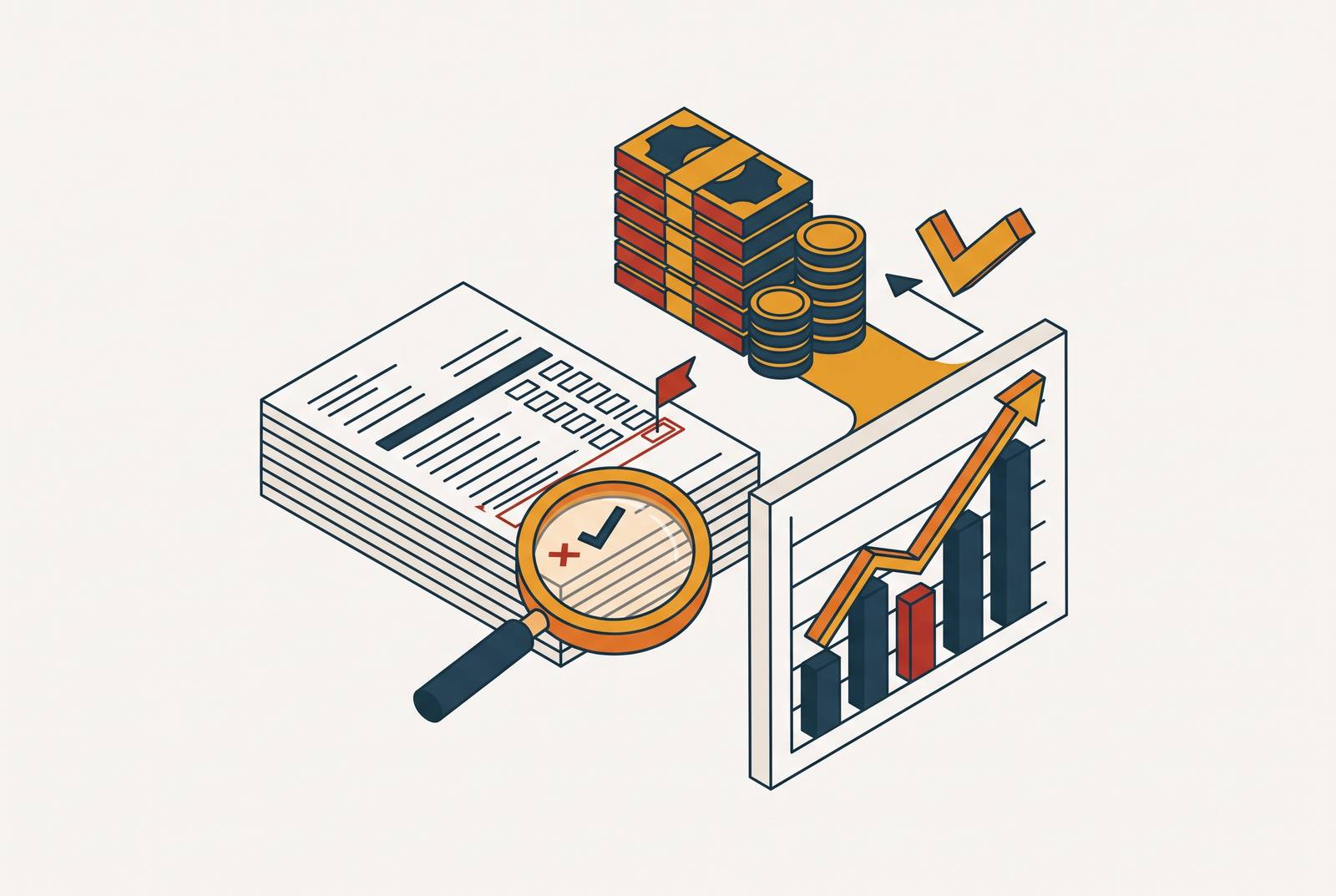
What detection actually requires, at minimum, is a different architecture. It starts with a current, accurate fee schedule loaded for every payer, including rate changes from contract renewals, loaded before claims are adjudicated rather than checked against after the fact. It requires claim-level remittance comparison: each EOB or ERA matched against the specific contracted rate for that CPT code, modifier combination, and payer, at the moment payment posts, not weeks later in a batch review. It requires separating systematic underpayment patterns, the same code and payer producing the same shortfall repeatedly, from one-off processing errors, because systematic patterns are where the recoverable money actually concentrates. And it requires a dedicated worklist for flagged underpayments, structured the same way a denial worklist is: assigned, prioritized by dollar value, tied to a deadline set by the appeal window.
None of that fixes everything, either. Some underpayment risk originates on the provider side: missing modifier -25 or -59 documentation, E/M level documentation that doesn't actually support the code billed, outdated CPT or HCPCS codes still in use. Documentation gaps mean the payer's math is defensible given what was submitted, so these are write-offs to absorb rather than disputes worth pursuing with a payer. They're write-offs the practice created for itself, and the fix belongs in documentation and coding review, not in an appeal letter.
New codes deserve particular attention in this framework. The 2026 HCPCS additions for hydrophilic catheters (A4295, A4296, A4297) and the expansion of G2211 to home and residence E/M services produce payer-side underpayments when a payer's fee schedule system lags behind the code set. Any major coding update should trigger an audit of related claims closely for the first several months after the effective date.
How to build and prioritize an underpayment recovery workflow
Detection only pays off if recovery moves fast and matches the dispute mechanism to the underpayment type. Sorting claims into the wrong bucket, or letting them sit in a general queue, wastes the exact time practices don't have.
Fee schedule loading errors and rate drift belong with the payer's provider relations channel, backed by the contract amendment or rate letter as proof. These are administrative errors, and once confirmed, payers can typically correct them in bulk across every affected claim rather than one at a time.
Downcoded E/M visits need a documentation-first appeal. The standard the payer's downcode gets measured against is the AMA's own documentation guidelines, and the appeal has to demonstrate, with the actual clinical note, that the documentation supports the level billed. Asserting the code was right isn't enough; the note has to show it.
Modifier bundling errors follow a similar logic: the operative or procedure note needs to show the services were genuinely distinct, and the appeal should cite the specific CMS or payer policy permitting separate payment under that modifier.
Post-payment clawbacks are their own category, and the clock matters more here than anywhere else. Response has to land inside the payer's stated recoupment window, with documentation attached. Given that recovery yield on appeals fell in the first half of 2026 compared to the year before, timely response isn't just good practice anymore, it's close to the only lever a practice has left.
Prioritization should run on dollar value and remaining appeal-window time, not on date of service. A high-dollar systematic underpayment with a closing window outranks a low-dollar one-off error with months of runway left, every time.
Outcomes matter as much as the appeals themselves. Every successful appeal should get logged with the specific argument and documentation package that worked for that payer and that code combination. Staff turnover is inevitable in a small billing department; institutional memory about what actually moves a specific payer isn't, unless someone writes it down.
Finally, underpayment findings shouldn't dead-end once the check clears. A documented pattern of E/M downcoding by a specific payer across hundreds of claims is far more persuasive at the negotiating table than a handful of anecdotes from frustrated staff. Every underpayment a practice catches and recovers is also evidence, and that evidence belongs in the next contract renegotiation.
Where AI and automation change what is feasible
The math above explains why manual detection struggles to keep pace: a three-to-five person billing team cannot reconcile every remittance against a live fee schedule, flag systematic patterns across payers, and track appeal deadlines by hand at the volume a real practice generates. That's exactly the kind of pattern-matching and deadline-tracking work automation is suited to, matching claim-level remittances against contracted rates the moment payment posts, rather than in a quarterly batch review, and separating systematic shortfalls from one-off errors automatically rather than relying on someone to notice the pattern manually. The payer side has already moved in this direction, using algorithmic review to scale downcoding and clawbacks. The practices most exposed right now are the ones still relying on a stored variance rate and a month-end glance to catch what the other side is now generating at machine speed.
Sources
- Underpayment Detection for Physician Groups | PayerPrice
- Healthcare Underpayment Recovery: Causes, Detection, and AI Solutions
- Q1 2026 Healthcare Coding and Payment Integrity Updates
- Healthcare Underpayments: A Provider's Recovery Guide | PayerPrice
- Healthcare Underpayments: A Complete Guide for Providers | MD Clarity
- How to implement automatic payer underpayment detection? | MD Clarity
- Falling Rates of Insurance Claim Denials Fail to Drive Better Financial Performance for Hospitals, Health Systems and Medical Practices, According to a Kodiak Solutions Analysis