Denial Prevention at the Front Desk Through Eligibility and Auth Verification
Catching eligibility gaps at check-in prevents denials before billing begins.
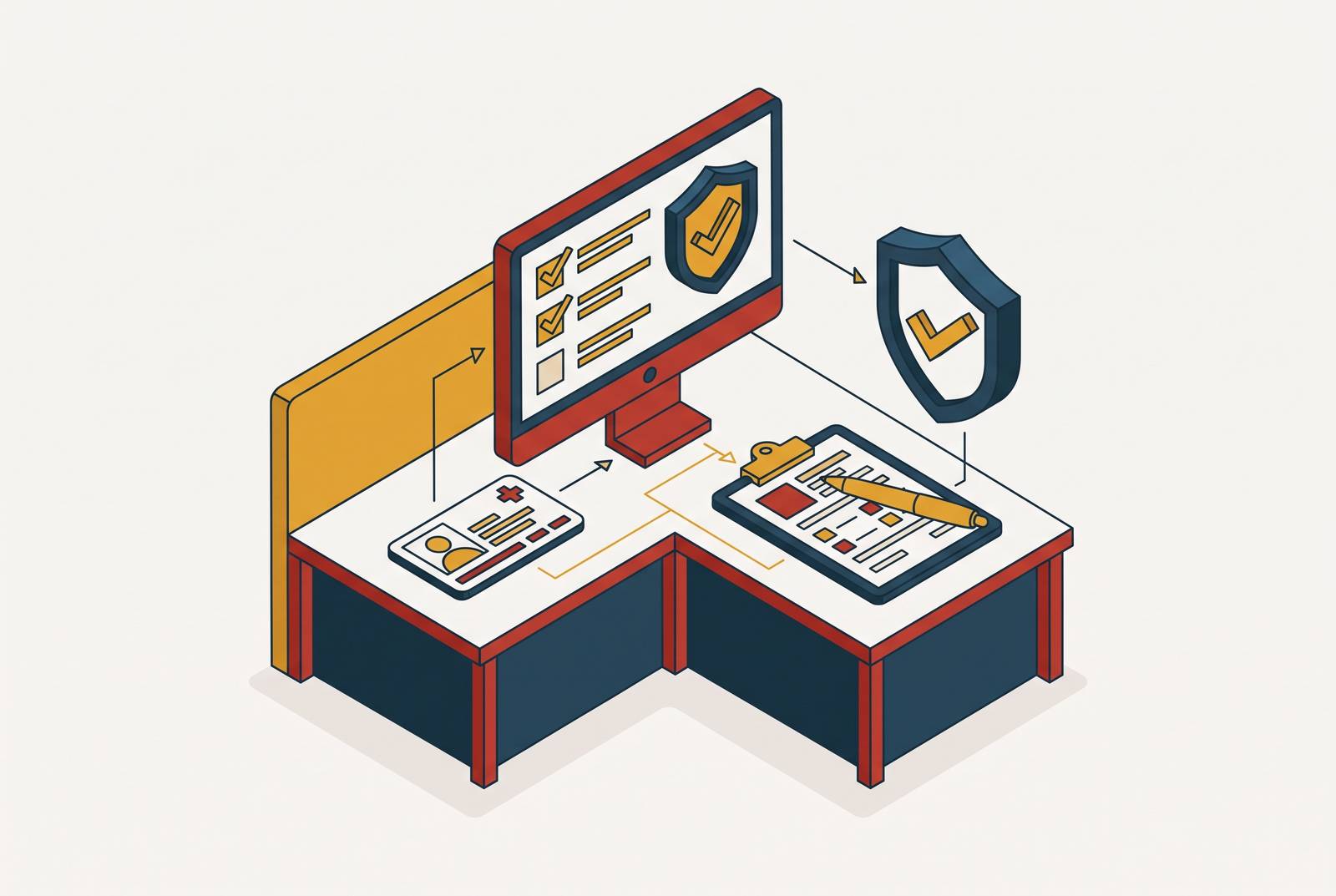
Denials are rising, and the rise is not leveling off. Initial denial rates hit 11.81% in 2024, according to Kodiak Solutions data covering more than 2,100 hospitals and 300,000 physicians, up 2.4% year over year. Experian Health's 2025 State of Claims survey found 41% of providers now report denial rates of 10% or higher, up from 30% in 2022, and both data sets, tracking different populations, point the same direction for three straight years.
HFMA puts annual losses to claim denials at $262 billion across U.S. hospitals, and 65% of denied claims never get reworked at all; they get written off instead of recovered. Once a claim gets denied, the odds it turns back into revenue are poor, and that single fact should change what counts as a responsible response to the whole problem.
A billing execution problem, better AR staffing, faster appeals, more diligent write-off review, does not explain numbers this large and this consistent across years and sources. Most denials trace back to preventable causes, and most denied dollars never come back once the denial lands. The arithmetic points toward one priority: stop the denial from forming in the first place. Recovery carries real limits as a strategy, so a practice still organized around recovery is working the wrong end of the process.
How eligibility errors turn into denied claims
Registration errors account for 30% of denials, insurance verification failures add another 20%, and authorization failures contribute 15%. Add those up and two-thirds of denial volume gets locked in before a biller ever opens the encounter. Denials get decided at the front desk far more often than in the back office; billing staff mostly formalize a result that was already set in motion at check-in.
Eligibility verification sounds simple: confirm the patient has coverage. In practice it fails in a short, repeatable list of ways. Experian Health's 2025 data found that 26% of providers trace at least one in ten denials to intake errors like wrong policy numbers, outdated insurance cards, and missed rechecks between scheduling and the visit.
The costliest habit is verifying coverage once at scheduling and never again. Coverage lapses in the days between booking and the appointment, and a card presented at check-in proves nothing about active enrollment in the payer's system that morning. Missing a secondary payer sends a claim to the wrong primary carrier entirely. A misspelled name, a transposed digit in a date of birth, or a member ID copied wrong can each trigger a denial weeks later, long after anyone remembers the visit. Misreading plan type, HMO versus PPO versus EPO, can mean the provider was never in-network for that visit to begin with.
None of this is visible in the room. Nobody at the front desk watches a denial happen; they watch a patient check in, get roomed, and leave. The consequence shows up on a remittance advice weeks later, after the filing clock has run the whole time and the window to fix it before submission has closed. Billing operations data puts the rework cost of an eligibility-related denial at $200 to $500 per claim. For a practice billing $2 million a year, front-office denials alone can run roughly $130,000 in lost revenue, about 6.5% of total revenue, before counting the staff hours spent reworking claims that never should have gone out. Eligibility verification is among the cheapest denial prevention a practice has access to, and plenty of practices under-invest in it precisely because it doesn't look like billing work.
Prior authorization failures and where they begin
Authorization is the second-largest denial driver. In 2025, Experian Health survey data identified auth issues as a leading denial reason among revenue cycle leaders. The mechanism behind most of those denials is timing more than complexity. Authorization gets requested too late, sometimes after the service has already been rendered, and retroactive requests get denied outright by many payers as a matter of policy, not judgment. Services rendered without authorization frequently can't be billed in-network at all, and rush requests filed under deadline pressure tend to skip the documentation depth a payer's medical policy actually requires to approve on the first pass.
Denial rates vary sharply by payer, and that variance matters more than most practices treat it. KFF's 2025 analysis of 14 major insurers found Medicare Advantage authorization denials averaging 12%, ranging from 5% at Elevance to 17% at UnitedHealth. Medicaid managed care plans averaged 14%, ranging from 2% to 23% depending on the plan, while ACA Marketplace insurers averaged 18%, ranging from 3% to 25%. Nearly 53 million prior authorization requests went to Medicare Advantage insurers in 2024, and 4.1 million, or 7.7%, came back denied.
The gap between best and worst performer inside each segment is the real finding here, and generic knowledge of "prior auth" as a category does little to close it. Knowing a specific payer's authorization habits before scheduling the visit is what determines whether a request clears on first submission. One insurer denying at 5% and another denying at 17% for the same segment is not noise, and it reflects a meaningful operational difference practices need to track.
Nearly two-thirds of Medicare Advantage authorization denials got overturned on appeal, per KFF. Read one way, that suggests the appeals process works well. Read another way, it suggests a large share of initial denials were never well grounded, and a properly built first submission, with the right documentation attached the first time, would have skipped the denial and the appeal both. Treating appeal success as a safety net misreads what that number actually shows. It looks more like evidence of avoidable rework than proof the system functions as intended.
What a correct eligibility verification workflow covers at each touchpoint
One eligibility check is not enough. Coverage needs confirming at three separate points, because each point catches a different kind of failure, and skipping any one of them leaves a gap the others can't cover.
At scheduling, the workflow needs to confirm active enrollment and plan type against the payer's system rather than trust the card, identify whether the rendering provider and location are in-network, flag any service that will require prior authorization before the visit gets booked, and collect the correct member ID, group number, and payer contact details. This catches structural mismatches: wrong plan, no network status, missing information that blocks billing no matter how the visit itself goes.
Between 48 and 72 hours before the appointment, the practice needs to recheck enrollment, since coverage can terminate in that gap; confirm any authorization already obtained is still valid and still covers the planned service; and verify demographic data against payer records again. This catches terminations and expirations the scheduling-time check had no way of seeing coming.
At check-in, staff scan the current insurance card against what's on file, confirm the coverage the patient reports matches the active payer record, identify coordination of benefits if a secondary payer exists, and confirm the authorization number is documented and tied to that specific visit. This catches same-day changes and paperwork gaps that slipped past the first two checkpoints.
Front-desk staff don't need deep payer-policy expertise to run this well. They need a workflow that surfaces exceptions automatically, so a trained biller can act on a flag before the claim ever gets created, instead of finding the problem for the first time in a denial letter.
What a correct prior authorization workflow covers from scheduling through service
Authorization belongs to the scheduling phase, not the billing phase. Treating it as something billing handles after the visit already happened is a design flaw, and it's the single most common one in this category. Fix the sequencing and most of the downstream denial disappears on its own.
Identifying the requirement starts with checking the specific payer's current policy for the planned service, since policies shift without notice and vary by plan type even inside one insurer. The workflow has to confirm whether the rendering provider, the facility, and the exact CPT codes involved trigger a requirement under that plan. Historical approval proves nothing here; payers add requirements mid-year regularly, and last year's experience with a payer says nothing about this year's policy.
Submitting the request means getting it in before the service happens, with enough lead time to receive a determination and still appeal if denied, and including the exact clinical documentation the payer's policy calls for, since incomplete documentation is the fastest route to a medical-necessity denial. It also means tracking the request through to an actual determination; a request sitting unanswered is not an approval, no matter how close the appointment date sits.
Before the visit, someone has to confirm the authorization number is on file and matches the service, the rendering provider, and the date of service, and confirm it hasn't expired. If the authorization was denied, the service shouldn't go forward without a plan: appeal it, request an expedited review, or reschedule. Rendering the service and hoping it works out leaves too much to chance, and treating it as a plan is how avoidable denials become unavoidable ones.
Denial rates range from 5% to 25% depending on the insurer and the segment, so a single generic authorization process doesn't hold up across a practice's payer mix. Payer-specific knowledge separates a clean first submission from a denial. Practices that treat prior auth as a box to check, rather than a process that changes shape by payer, are the ones absorbing the most preventable denials in this category.
How payer policy changes undermine verification workflows that were working
Verification isn't something a practice configures once and leaves alone. It requires current payer policy, not last year's, and payers have no obligation to announce changes ahead of time. Most practices find out a policy changed the same way they find out about anything else: the claims start coming back denied.
The 2024 denial mix shows this shift happening in real time. Even as prior-authorization-related denials fell 7.7%, medical necessity denials rose 5% and information-request denials rose 5.4%, according to Kodiak Solutions. Payers didn't deny less; they moved the denial reason to a different category. A verification workflow built around last year's most common denial reasons will miss this year's entirely.
The KFF insurer data shows how differently payers behave once a denial actually happens. Centene's Medicare Advantage overturn rate on appeal sat at 93%, against 40% at Kaiser Permanente. That gap suggests some insurers deny broadly, expecting most denials to go unappealed, while others deny narrowly and mean it. Knowing which pattern a given payer follows changes how an authorization request should get built before it's ever submitted.
A verification workflow tied to a static payer list, or reviewed once a year, drifts out of alignment with how payers actually behave within a few months, not a few years. Continuous tracking of payer policy updates is the only reliable answer here; a reactive scramble once denials pile up amounts to cleanup well after the fact. Most practices don't have the staff to track policy by hand at that pace, which is exactly why so many only learn a policy changed after the claim bounces back. Automated, continuous policy tracking earns its keep right here, as the most realistic way to keep verification accurate while payers keep moving the target.
What real-time eligibility and authorization verification can prevent that manual checks cannot
Manual verification has a ceiling built into how it works. A staff member checking a payer portal sees a snapshot, and that snapshot may not reflect a termination or a policy update from that same morning. Manual checks don't scale cleanly either: as patient volume rises, staff either slow down intake to keep checking properly or start skipping checks to keep pace. Every time a trained staff member leaves, meanwhile, the payer-specific knowledge that person built up walks out the door with them, leaving the next hire to start from zero, again.
Real-time, automated verification narrows each of those gaps by design. Coverage status gets confirmed against the payer's live eligibility data at each touchpoint, not a cached result from an earlier check that morning. Coordination of benefits gets identified automatically instead of depending on a patient to remember and disclose a secondary policy. Authorization requirements get flagged at scheduling based on current payer policy, not on what worked last time, and demographic mismatches surface before the claim goes out, not after a denial code arrives explaining what already went wrong weeks ago.
Practices using real-time eligibility verification with AI support have reported meaningful denial rate reductions, with some early adopters seeing substantial drops in front-end denial volume. That figure lines up with a separate finding from Experian's 2025 survey: a growing share of providers say submitting a clean claim is harder than it was a year earlier. A manual-check problem is colliding with an accelerating rate of payer policy change, and automation is one of the few responses built to address both halves at once. Fewer claims leave the front desk carrying errors baked in, which means fewer denials downstream, less rework, and shorter time sitting in AR.
What the billing operation needs to hold the gains from better front-desk verification
Better front-desk verification cuts denial volume; it doesn't get it to zero. Payers still deny claims for reasons outside a practice's control, and those denials still need working the moment they arrive, not weeks later once the file has gone cold.
Real-time claim tracking matters here, so a practice knows a claim's status as it moves rather than discovering a problem at month-end when the filing deadline has already passed. Every denial needs working on arrival rather than triaged into a backlog: the cost of working a denial immediately is fixed and known, while the cost of letting it sit is the full value of the claim, at risk of joining the write-off pile for good. Each denial that does get worked should feed back into a record of how that specific payer behaves, so the next claim to that payer gets built smarter than the last one was.
The HFMA figure, that 65% of denied claims never get reworked, reflects denial volume outrunning staff capacity more than any staffing failure on its own terms. Practices buried in denials triage and write off because they have no other option left to them. Better prevention at the front desk is what shrinks that backlog down to something a normal-sized team can actually work through in a normal week. Clean claim rate is the number that captures whether this is happening: 95% or higher is the standard for 2025, and the highest-performing organizations run closer to 98%. Front-desk verification is the single biggest lever on that number, ahead of any downstream billing fix a practice might reach for instead.
Altair builds toward that outcome as a connected system rather than a single checkpoint. Altair Clear tracks payer policies as they publish and checks every claim against current policy before it goes out the door. Altair Memory builds a payer-specific behavior record from every claim worked, so the next submission to that payer benefits from what the last one revealed about how that payer actually behaves. Altair Live gives the practice visibility into every claim and every dollar as it moves, without requiring someone to manage it claim by claim by hand. The gains from catching eligibility and authorization problems at the front desk don't stay siloed there; they feed a revenue cycle a practice can actually watch, without adding headcount just to keep watching it.